Conditions we treat

Understand your injury.

Choose a condition to read what is damaged, how it is diagnosed, what to try before surgery, and how long recovery takes. These are the conditions we see most often, not a complete list of everything we treat. If yours is not here, call the office.

Ankle

Ankle osteochondral lesion

A deep ache inside the ankle, swelling after activity, and sometimes catching — months after a sprain.

What it is

An osteochondral lesion is an area of damage to the smooth cartilage and the bone just beneath it, usually on the top of the talus, the bone that forms the lower half of the ankle joint. Most follow an ankle sprain or fracture, where the bones strike or shear against each other. Some lesions stay stable; others crack, separate, or leave a loose fragment in the joint.

How it's diagnosed

These are frequently missed because the pain is blamed on the original sprain. X-rays can be normal. MRI is the key study and shows the size of the lesion, the bone swelling beneath it, and whether the fragment is stable. CT is sometimes added to measure the bone involvement precisely for surgical planning.

Non-surgical options first

Small, stable lesions — especially in younger patients — often improve with a period of protected weight-bearing in a boot, activity modification, and physical therapy. Injections can help symptoms while the lesion is monitored.

When surgery is the right call

Considered when pain and swelling persist despite non-surgical care, when the lesion is large or unstable, or when a loose fragment causes catching or locking.

Dr. Jiang's approach

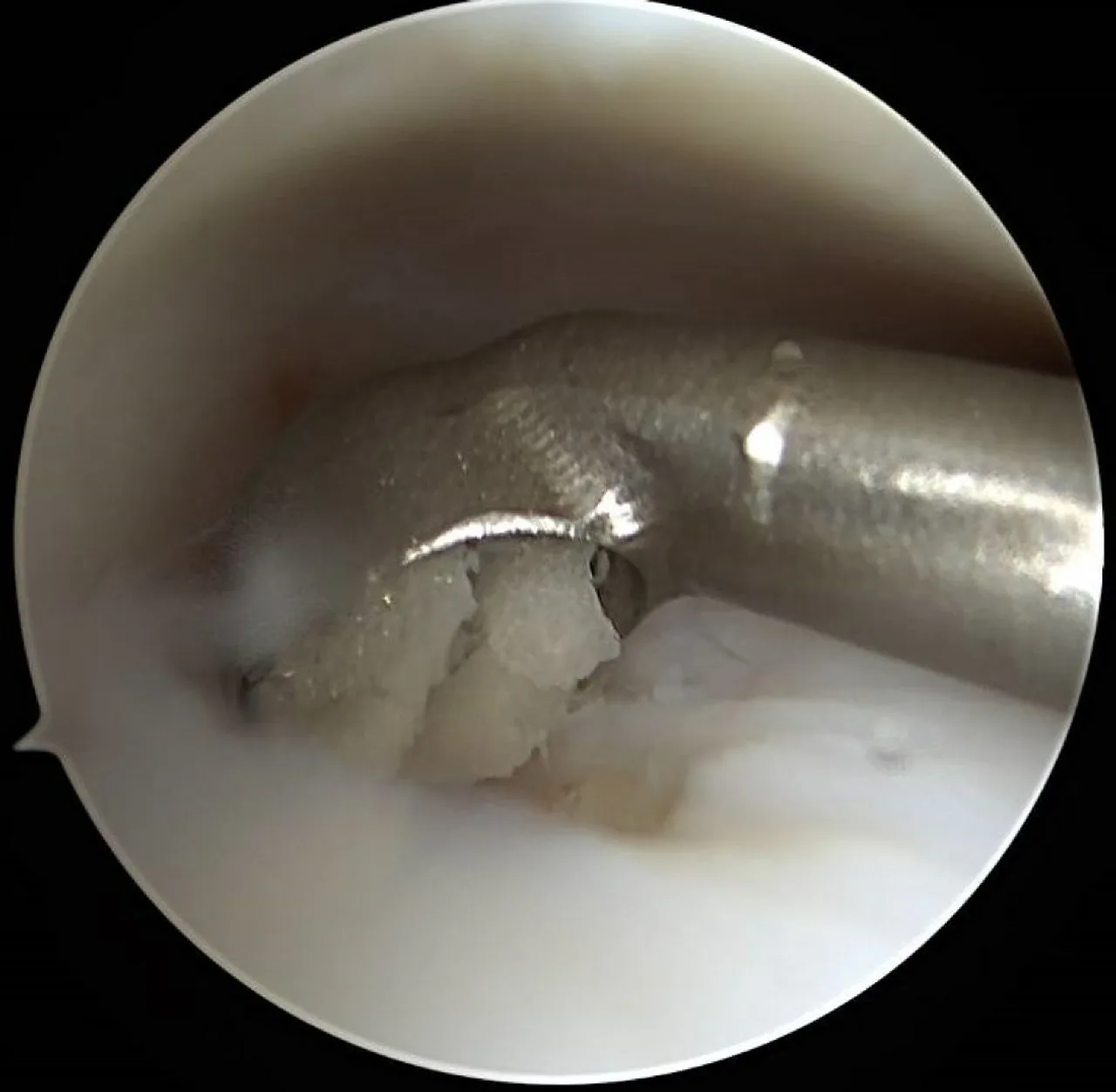
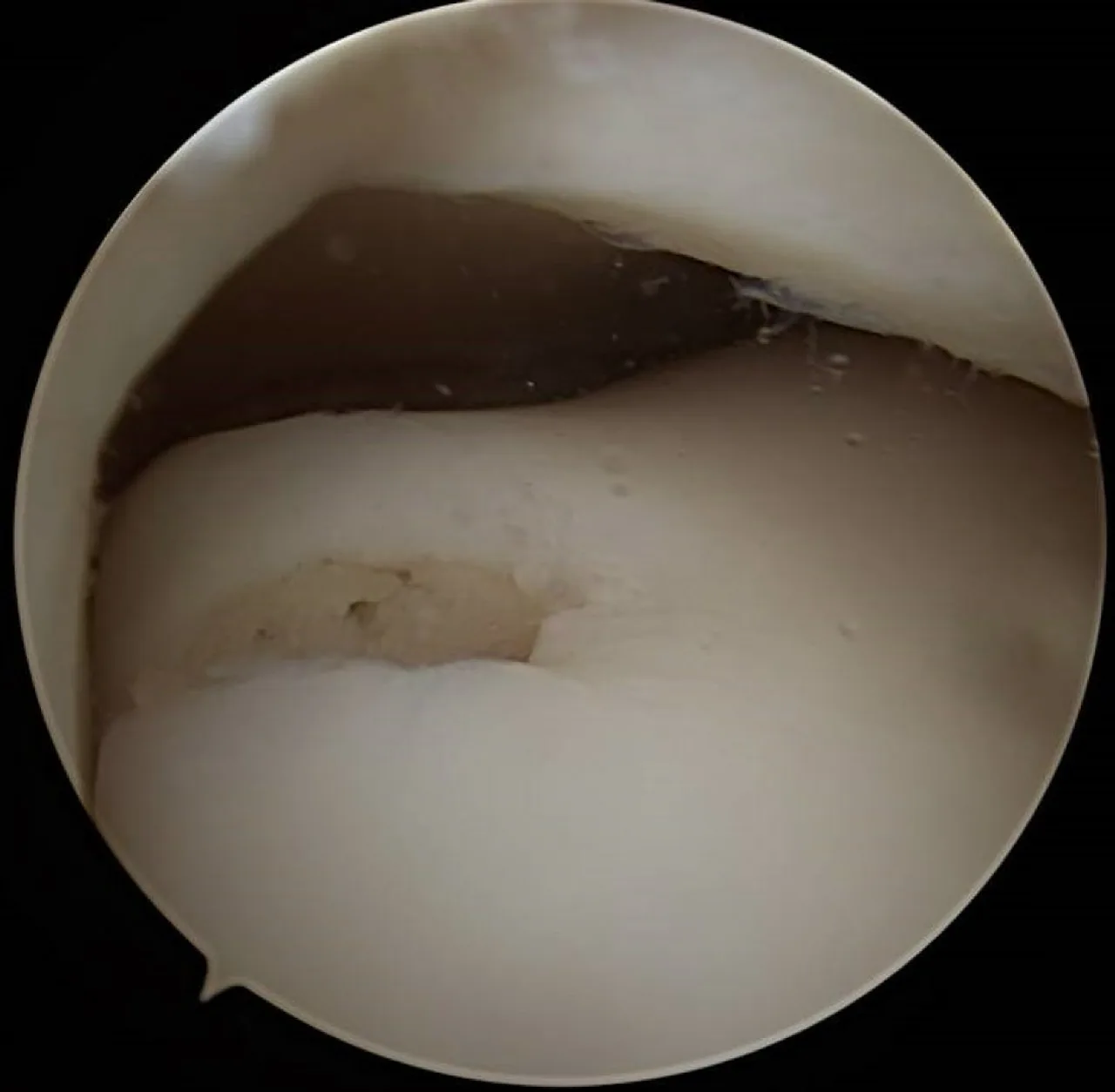
Arthroscopy is used to inspect the joint and treat the lesion. Smaller lesions are cleaned and stimulated to heal with microfracture or drilling, sometimes with an orthobiologic or cartilage-matrix augment. A large or displaced fragment with healthy bone can be fixed back in place. Larger defects may need cartilage or bone-and-cartilage transplantation.
Debridement and microfracture
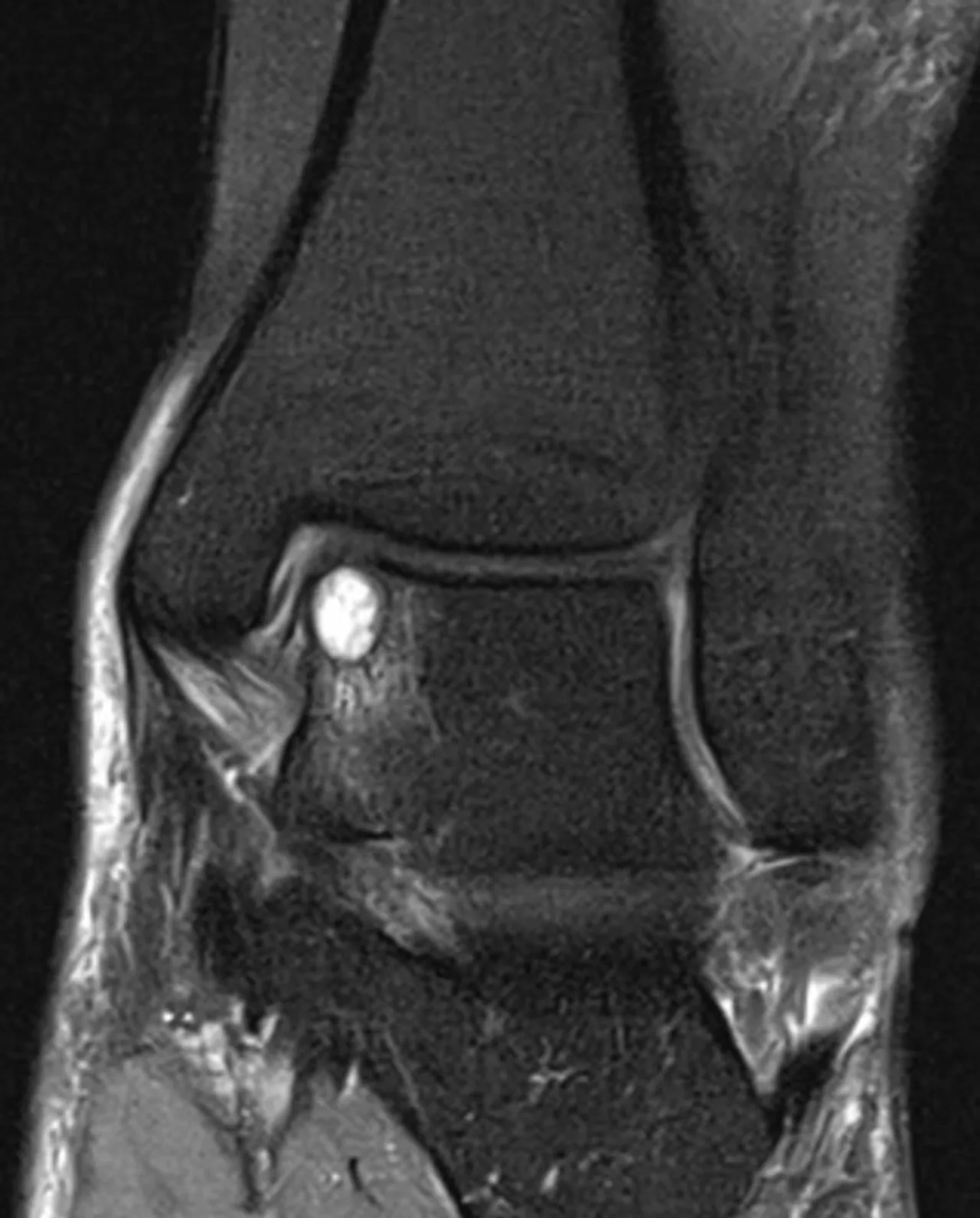
MRI
MRI The bright area in the corner of the talus, the bone at the top of the foot that forms the ankle joint, is the osteochondral lesion: damaged cartilage and the bone beneath it.
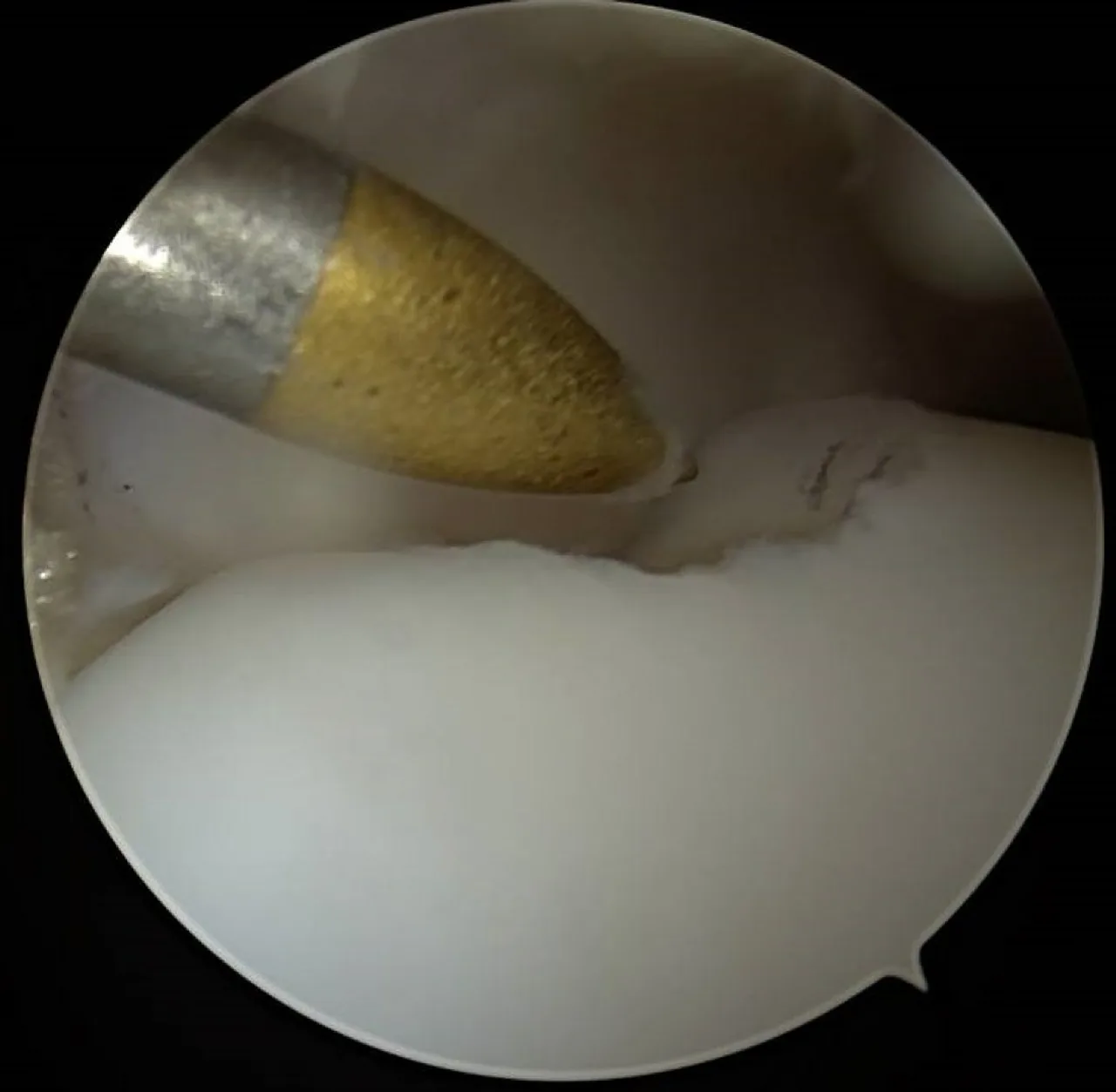
Debridement
Debridement Through the arthroscope, a shaver removes the loose, damaged cartilage down to a stable edge of healthy cartilage.
Microfracture
Microfracture A small pick makes tiny holes in the exposed bone. Blood and marrow cells come up through the holes and form a clot that heals into new repair tissue.
After treatment
After treatment The lesion has been cleaned to a stable base with microfracture holes, ready to fill in with repair tissue as it heals.
If surgery is needed — recovery timeline
Weeks 0–6
Boot and protected or non-weight-bearing on crutches; early ankle motion to nourish the cartilage.
Weeks 6–12
Progress to full weight-bearing out of the boot; balance and strengthening.
Months 3–6
Progressive impact; return to running and sport as strength and control allow.
Typical ranges. Your timeline depends on the injury, the repair, and how rehab goes.
Questions to ask at your visit
  • How big is the lesion, and is it stable?
  • Is it likely to heal without surgery?
  • What would I be able to do while it heals?
Evidence review
Ankle cartilage injury: results of surgery →
Results of bone marrow stimulation and how lesion size affects them, with references.
Read more from the AAOS
Osteochondritis Dissecans →
A note on what you read here

These pages describe how these injuries are generally evaluated and treated. They are not a diagnosis and not medical advice. Two people with the same MRI finding can need completely different plans — that is what the visit is for.

Not sure which of these you have? That's the normal reason to come in.

Request an Appointment
Kevin Jiang, MD
Orthopaedic Surgery · Sports Medicine
English · Mandarin · Spanish
Accepting new patients
Locations
72-06 Northern Blvd, 2nd Fl
Jackson Heights, NY 11372

2825 Jackson Ave
Long Island City, NY 11101

(866) 670-6824
Fax: (718) 533-1770
Where surgery happens
NewYork-Presbyterian Queens
56-45 Main Street, 4th Fl South
Flushing, NY 11355
(718) 670-2558
Hospital affiliations: NewYork-Presbyterian Queens; NewYork-Presbyterian / Columbia University Irving Medical Center; Hospital for Special Surgery (Affiliate Medical Staff). Institutional names denote affiliation, not endorsement.
This site is for informational purposes only and does not constitute medical advice. Use of this site does not create a doctor-patient relationship. For emergencies call 911.
© 2026 Kevin Jiang, MD