Understand your injury.
Choose a condition to read what is damaged, how it is diagnosed, what to try before surgery, and how long recovery takes. These are the conditions we see most often, not a complete list of everything we treat. If yours is not here, call the office.
Distal biceps tendon rupture
A pop at the front of the elbow lifting something heavy, then bruising and weak rotation.
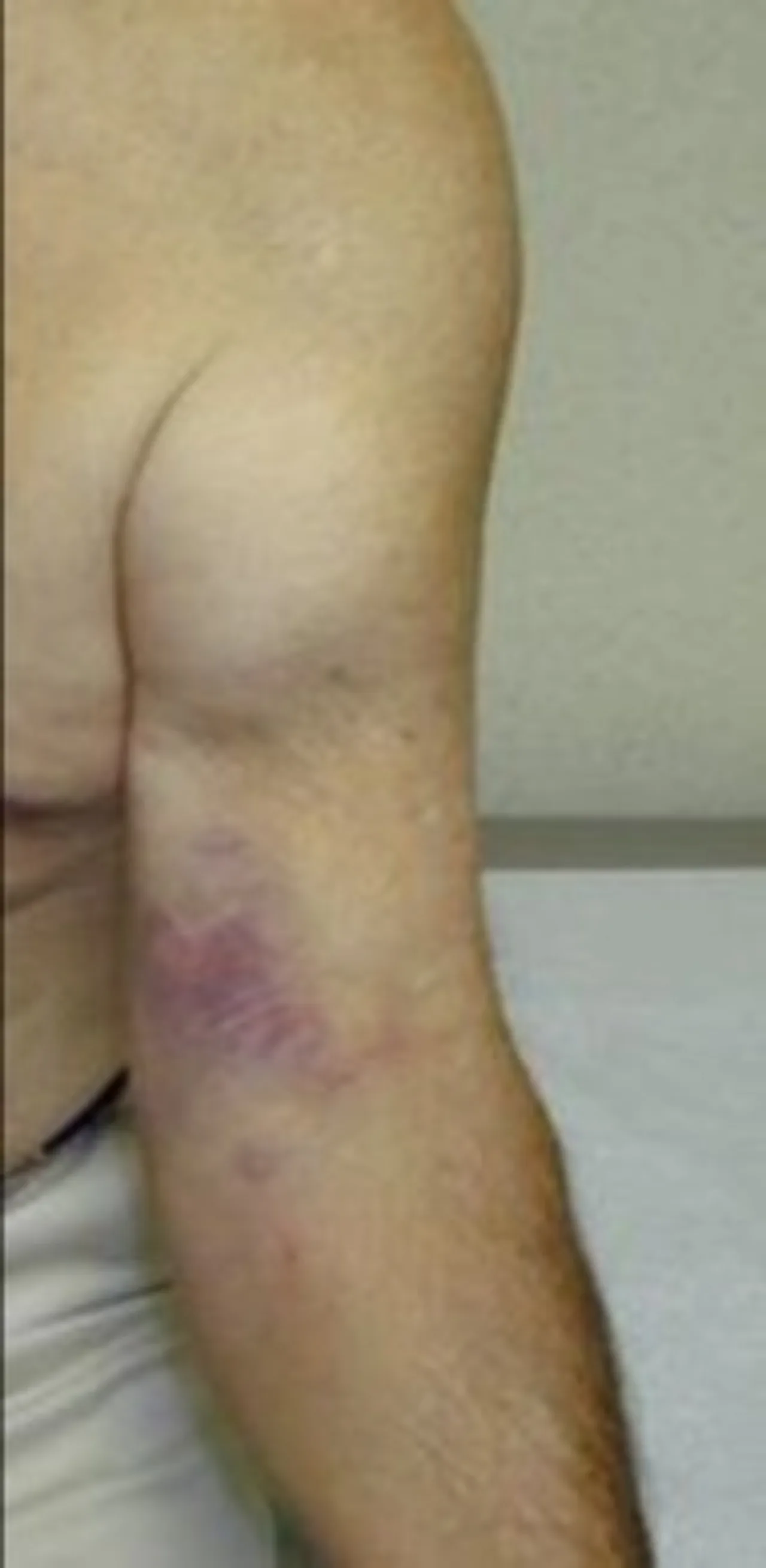
The distal biceps tendon attaches the biceps muscle to the forearm just past the elbow. It usually ruptures in a single event — catching a falling object, lifting a heavy load with the elbow bent — most often in men in their forties and fifties. People describe a pop, then bruising in the crease of the elbow and a visible change in the shape of the muscle as it retracts up the arm. The functional loss that matters is supination: turning a doorknob, using a screwdriver, turning a key.
The hook test, in which the examiner tries to hook a finger under the tendon at the front of the elbow, is highly reliable — with a complete rupture there is no cord to hook. Strength testing compares supination and flexion against the other arm. MRI confirms whether the tear is partial or complete and how far the tendon has retracted.
Reasonable for partial tears, for older or lower-demand patients, and for anyone willing to accept some permanent loss of rotational strength — roughly a 40 percent loss of supination strength and a 30 percent loss of flexion strength, which many desk-based patients tolerate well.
Recommended for complete ruptures in active patients and for anyone whose work or sport depends on rotational strength. Like the Achilles and the patellar tendon, this is time-sensitive: when it is repaired within the first few weeks, the tendon reaches its footprint easily, while a delayed repair may need a graft.
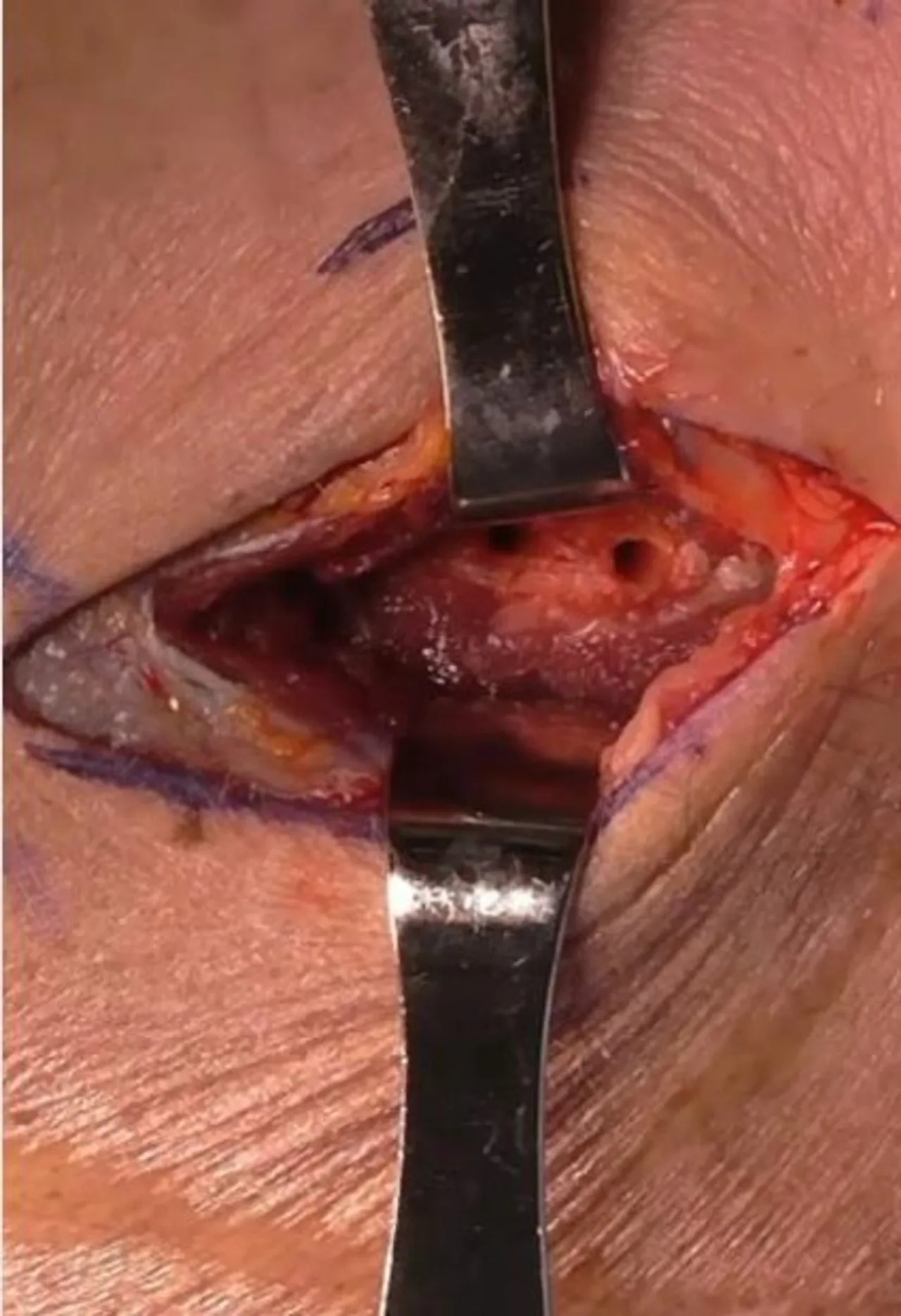
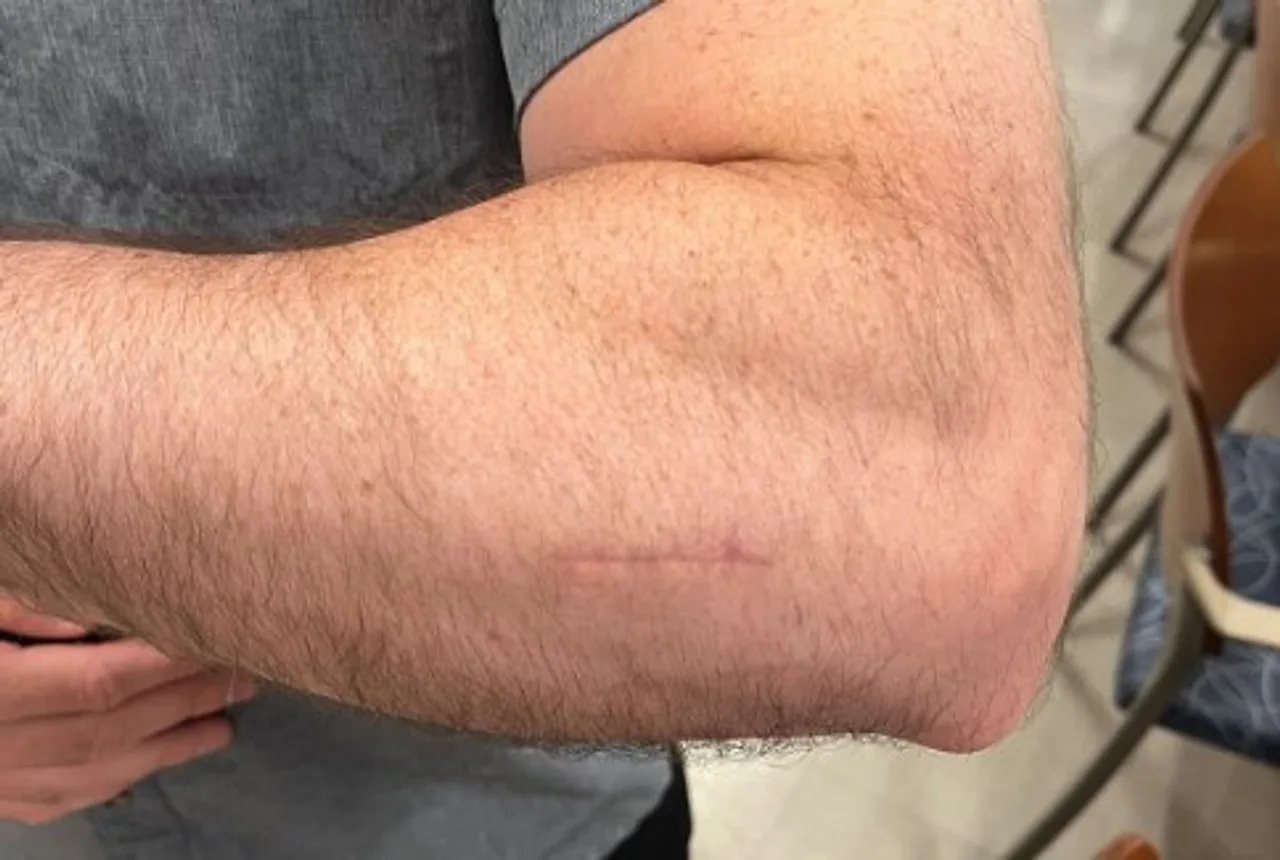
Dr. Jiang uses a two-incision technique. A small incision at the front of the elbow is used to find the torn tendon and pass it to the bone. A second small incision on the back of the forearm gives direct access to the spot on the radius where the tendon normally attaches, so it can be fixed back in its anatomic position with small buttons that hold it securely against the bone. Repair is best done within the first few weeks, before the tendon retracts and scars.
- Is my tear complete, and how soon should it be repaired?
- How much rotational strength would I lose without surgery?
- What is the risk to the nerves in that area?
These pages describe how these injuries are generally evaluated and treated. They are not a diagnosis and not medical advice. Two people with the same MRI finding can need completely different plans — that is what the visit is for.