Conditions we treat

Understand your injury.

Choose a condition to read what is damaged, how it is diagnosed, what to try before surgery, and how long recovery takes. These are the conditions we see most often, not a complete list of everything we treat. If yours is not here, call the office.

Knee

Posterolateral corner injury

Outer knee pain and a knee that bends backward or gives way, often with numbness or weakness lifting the foot.

What it is

The posterolateral corner (PLC) is a group of ligaments and tendons on the outer back part of the knee, including the lateral collateral ligament (LCL), the popliteus tendon, and the popliteofibular ligament. Together they stop the knee from bending outward, twisting, or bending backward too far. PLC injuries rarely happen alone and often come with ACL or PCL tears. The peroneal nerve runs nearby, so some patients also have numbness or weakness lifting the foot. These injuries heal poorly on their own and are easy to miss.

How it's diagnosed

The exam checks whether the knee opens on the outer side, twists outward more than the other side, or bends backward. The nerve is checked as well. X-rays look for small bone pieces pulled off the fibula. MRI shows which structures are torn and which other ligaments are injured.

Non-surgical options first

Only mild, isolated injuries without instability are treated with a brace and physical therapy.

When surgery is the right call

Most complete PLC injuries need surgery, and timing matters. Repair is often possible in the first few weeks, while later injuries usually need reconstruction. An untreated PLC injury is a common reason an ACL or PCL reconstruction fails.

Dr. Jiang's approach

Repair of torn structures back to bone when possible, or anatomic reconstruction with tendon grafts, often combined with ACL or PCL reconstruction. The peroneal nerve is protected during surgery.
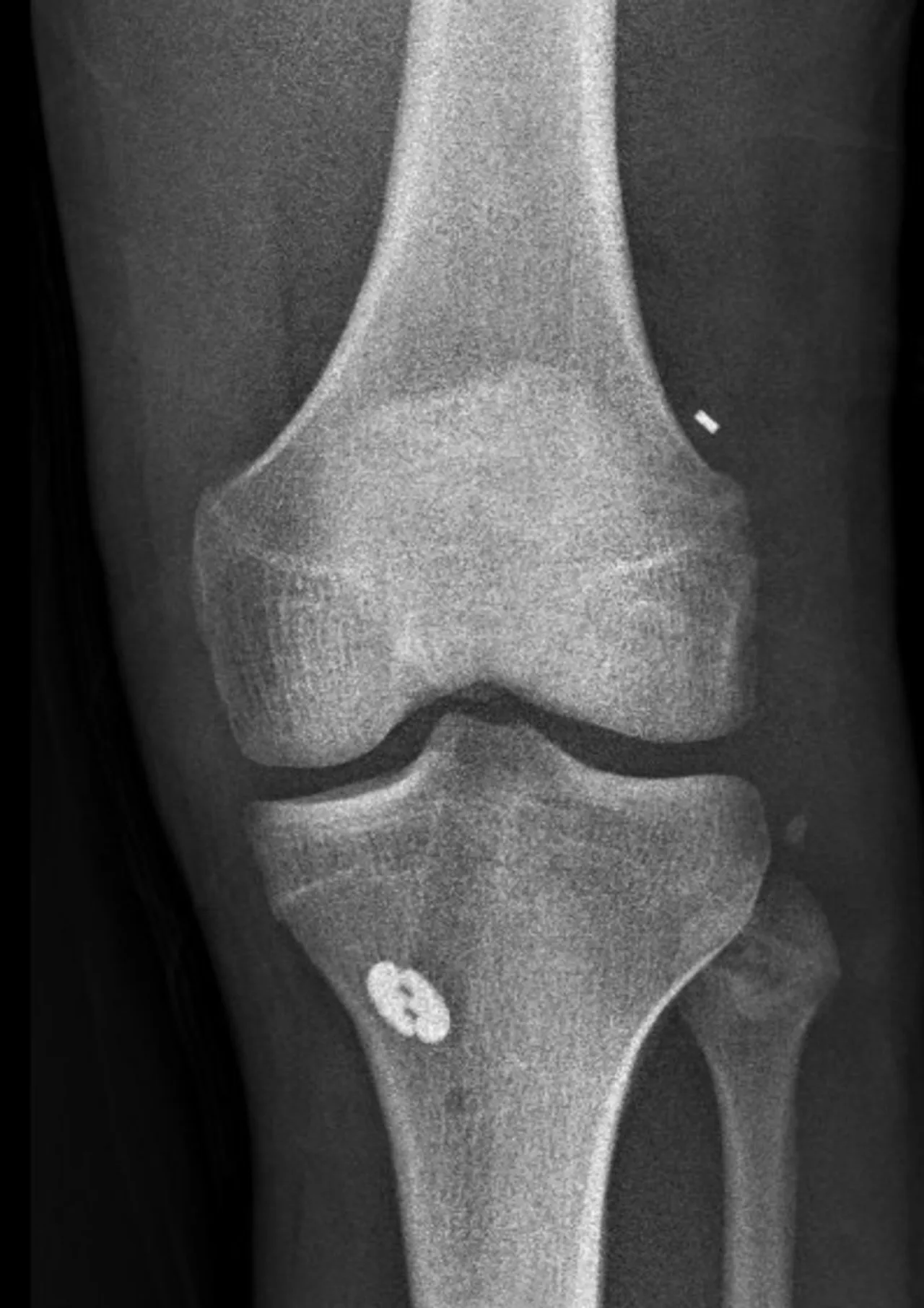
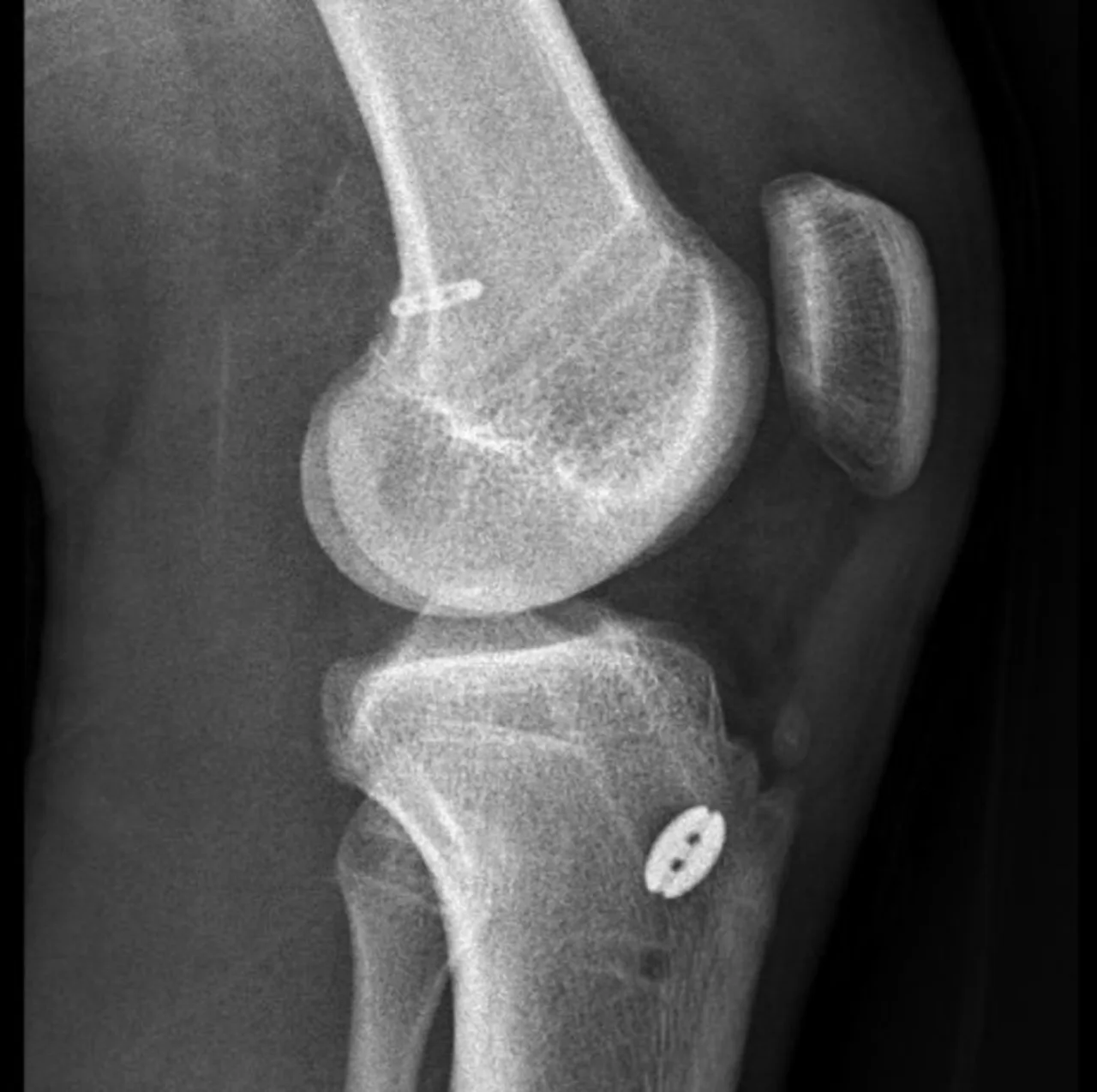
ACL and posterolateral corner reconstruction
X-ray after surgery: front view
X-ray after surgery: front view The ACL and the posterolateral corner were reconstructed in the same surgery. Small metal buttons and other fixation devices hold the new grafts in bone tunnels in the thigh and shin bones.
X-ray after surgery: side view
X-ray after surgery: side view The same knee from the side. The round button on the front of the shin bone and the small button on the thigh bone hold the grafts in place while they heal into the bone.
If surgery is needed — recovery timeline
Weeks 0–6
Brace locked or limited, protected weight-bearing, and gentle motion.
Weeks 6–12
Brace weaned; full weight-bearing, motion, and strengthening.
Months 3–6
Progressive strengthening, balance, and a return to running.
Months 9–12
Return to sport after strength and stability testing.
Typical ranges. Your timeline depends on the injury, the repair, and how rehab goes.
Questions to ask at your visit
  • Which structures of the corner are torn?
  • Are other ligaments injured too?
  • Is the nerve affected, and what does that mean for recovery?
Evidence review
Posterolateral corner injury: repair or reconstruction? →
Failure rates of repair vs reconstruction and return to sport, with references.
Read more from the AAOS
Collateral Ligament Injuries →
A note on what you read here

These pages describe how these injuries are generally evaluated and treated. They are not a diagnosis and not medical advice. Two people with the same MRI finding can need completely different plans — that is what the visit is for.

Not sure which of these you have? That's the normal reason to come in.

Request an Appointment
Kevin Jiang, MD
Orthopaedic Surgery · Sports Medicine
English · Mandarin · Spanish
Accepting new patients
Locations
72-06 Northern Blvd, 2nd Fl
Jackson Heights, NY 11372

2825 Jackson Ave
Long Island City, NY 11101

(866) 670-6824
Fax: (718) 533-1770
Where surgery happens
NewYork-Presbyterian Queens
56-45 Main Street, 4th Fl South
Flushing, NY 11355
(718) 670-2558
Hospital affiliations: NewYork-Presbyterian Queens; NewYork-Presbyterian / Columbia University Irving Medical Center; Hospital for Special Surgery (Affiliate Medical Staff). Institutional names denote affiliation, not endorsement.
This site is for informational purposes only and does not constitute medical advice. Use of this site does not create a doctor-patient relationship. For emergencies call 911.
© 2026 Kevin Jiang, MD