Understand your injury.
Choose a condition to read what is damaged, how it is diagnosed, what to try before surgery, and how long recovery takes. These are the conditions we see most often, not a complete list of everything we treat. If yours is not here, call the office.
Syndesmosis injury (high ankle sprain)
Pain above the ankle, between the two leg bones, that is worse when you push off or turn the foot out.
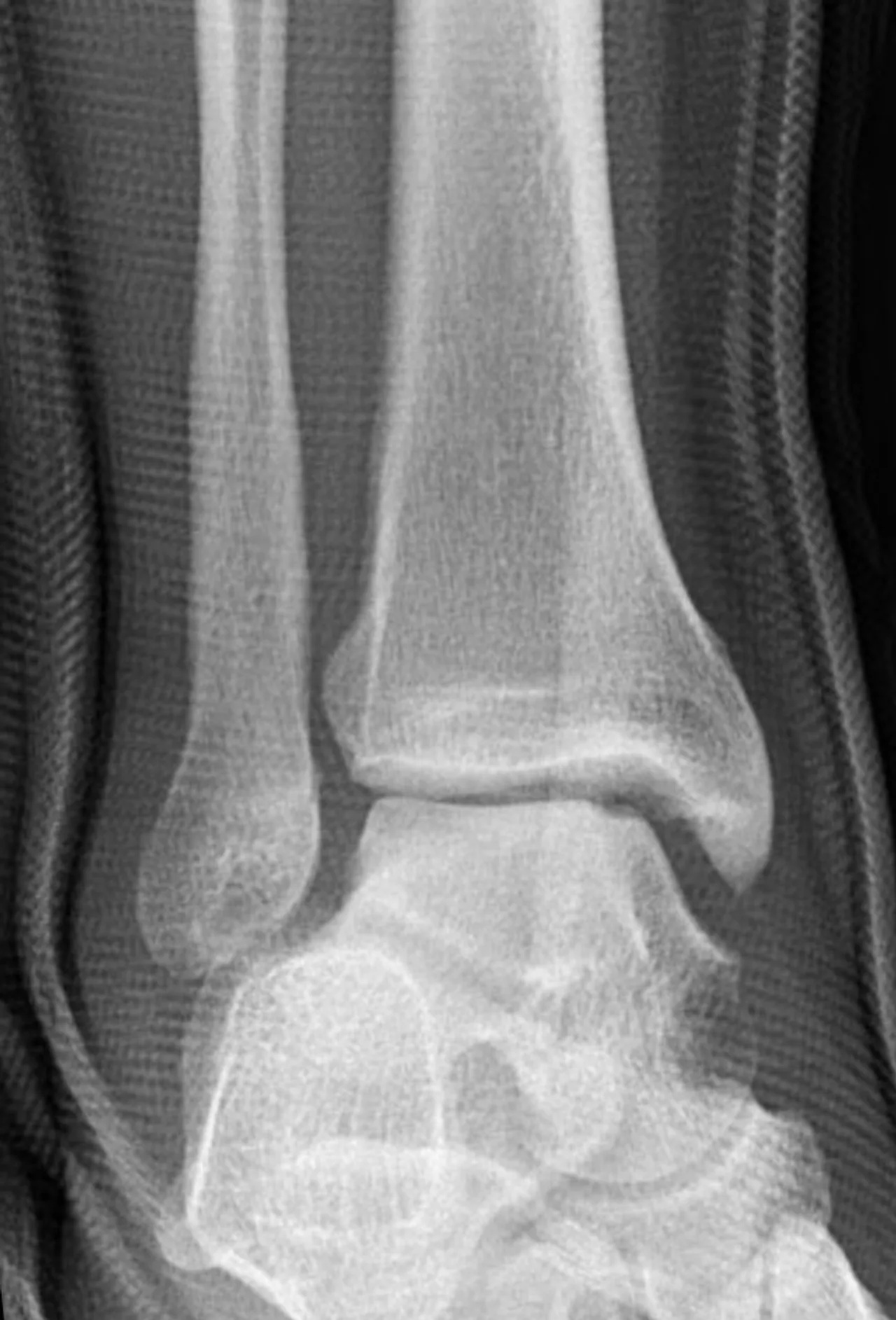
The syndesmosis is the group of ligaments that holds the lower ends of the tibia and fibula tightly together just above the ankle joint. It is injured when the foot is forced outward and the leg twists over it — common in football, soccer, hockey, and skiing. Compared with an ordinary sprain, it takes longer to recover, and if the two bones spread apart, the ankle joint becomes unstable.
The exam looks for tenderness above the ankle and pain when the leg is squeezed or the foot is twisted outward. Standing X-rays, often compared with the other ankle, show whether the space between the bones has widened. MRI shows the ligaments directly, and a stress X-ray or CT can reveal subtle instability.
A stable injury, where the bones have not spread apart, is treated in a boot with a gradual return to weight-bearing and therapy. Recovery is usually slower than for a common ankle sprain, often six to eight weeks or more before return to sport.
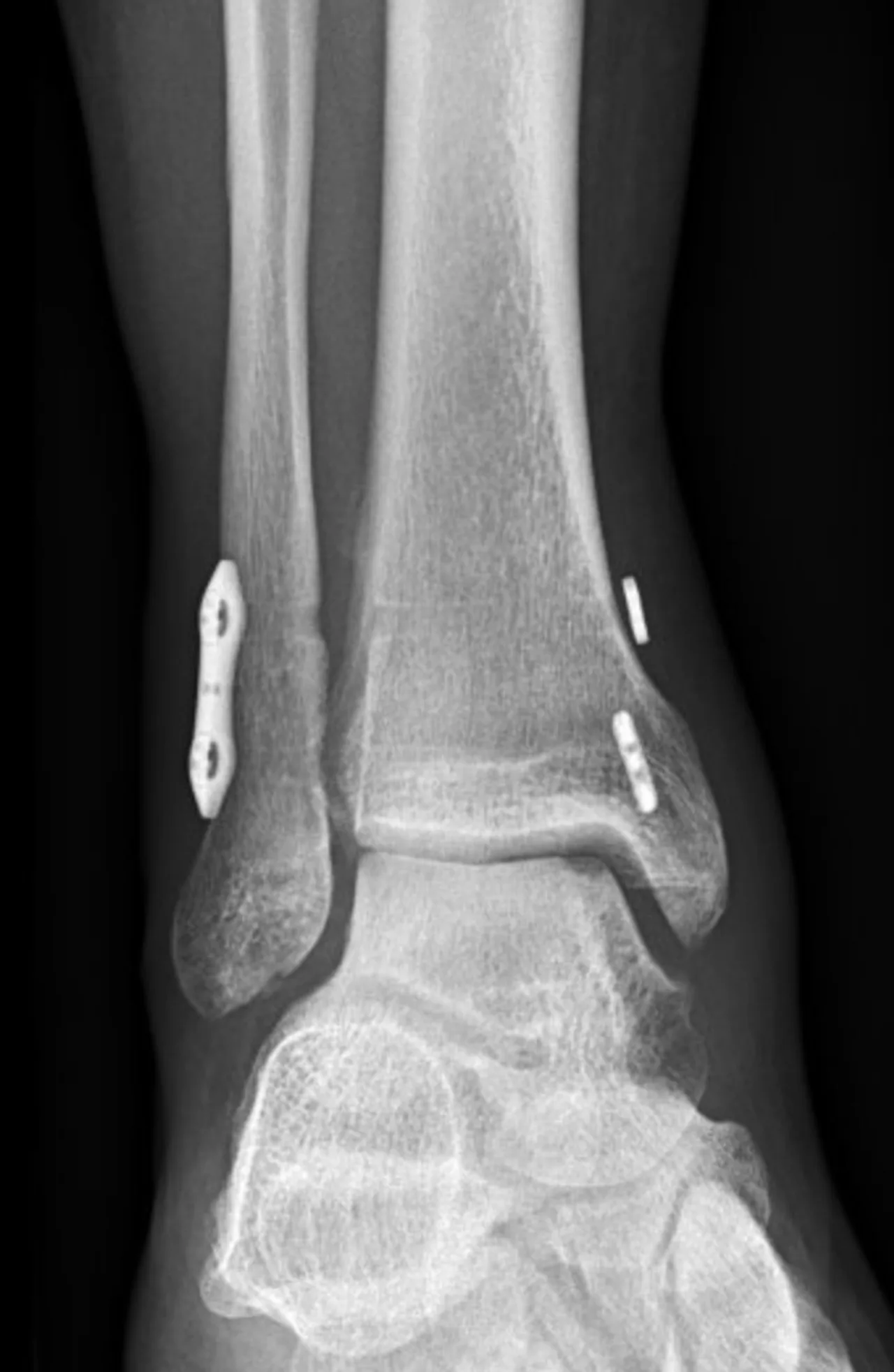
Recommended when the bones have separated or the syndesmosis is unstable on stress testing, and for many injuries that occur together with an ankle fracture.
The tibia and fibula are brought back into their normal position and held with a flexible suture-button device or screws while the ligaments heal. The suture-button allows some natural motion between the bones, usually does not need to be removed, and in most cases lets you put weight on the foot right away. Any associated fracture or ligament injury is addressed at the same time.
- Are the two bones stable, or have they spread apart?
- How long will this keep me out of my sport?
- Would a suture-button or screw be used, and will it need to come out?
These pages describe how these injuries are generally evaluated and treated. They are not a diagnosis and not medical advice. Two people with the same MRI finding can need completely different plans — that is what the visit is for.