Understand your injury.
Choose a condition to read what is damaged, how it is diagnosed, what to try before surgery, and how long recovery takes. These are the conditions we see most often, not a complete list of everything we treat. If yours is not here, call the office.
Platelet-rich plasma (PRP)
A concentrate of your own platelets, injected to calm inflammation and support tendon and joint healing.
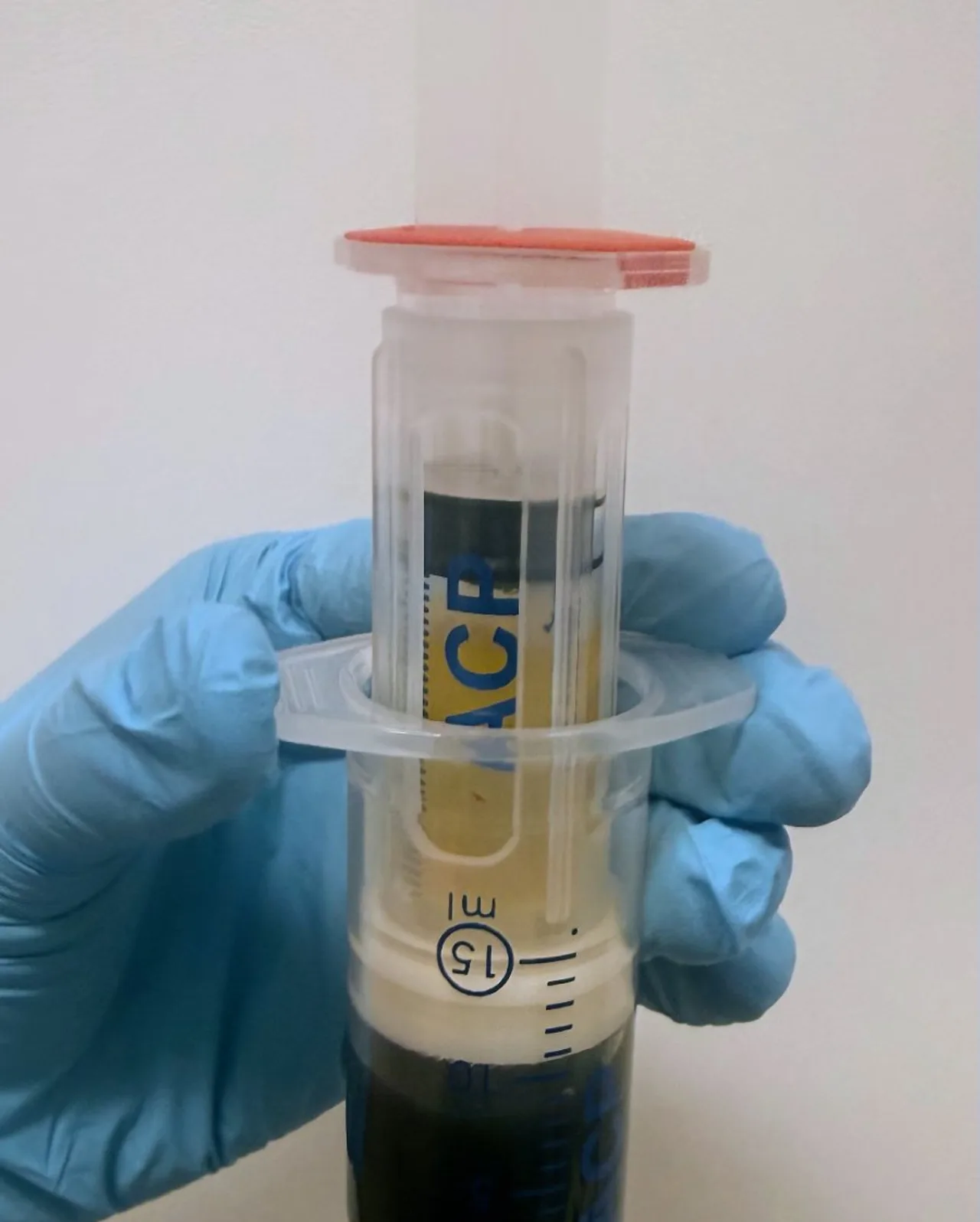
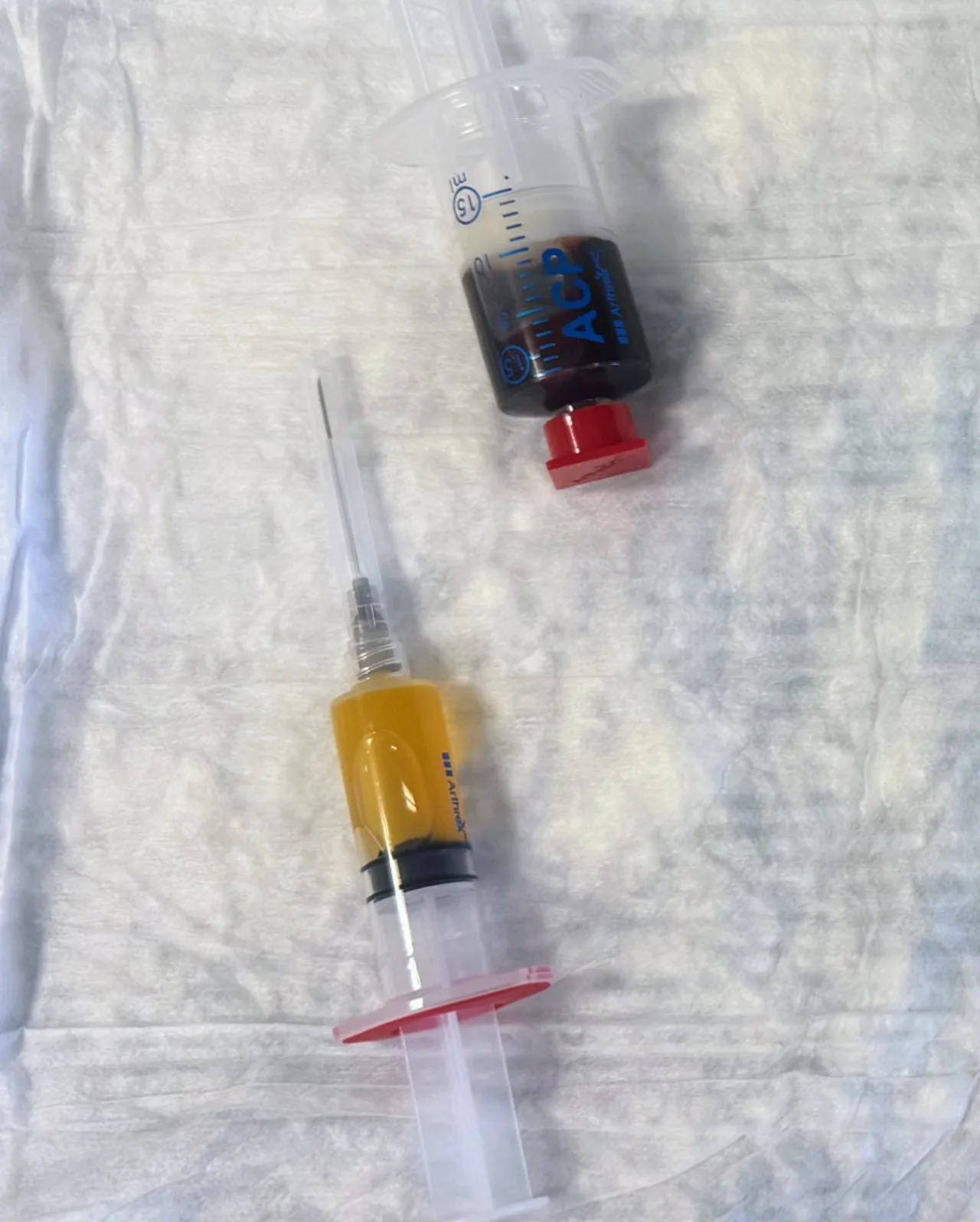
A small amount of your blood is drawn in the office and spun in a centrifuge to separate out the platelets. Platelets carry growth factors and signaling proteins that help regulate inflammation and healing. The concentrated platelet-rich plasma is then injected into the injured tendon or joint, usually with ultrasound guidance for accuracy. The whole visit takes about thirty to forty-five minutes.
PRP is most often considered for chronic tendon problems — tennis and golfer's elbow, patellar tendinopathy, and some rotator cuff and Achilles tendon conditions — and for mild to moderate knee osteoarthritis. It is typically a next step when therapy and activity modification have not been enough, particularly for patients who would prefer to avoid repeated steroid injections.
The strongest evidence is for tennis elbow and knee osteoarthritis, where studies show PRP can reduce pain and improve function for longer than a steroid injection. For other tendons the results are more mixed. PRP does not regrow cartilage or reverse arthritis; the benefit is symptom relief that can last many months. It can also be used during surgery to augment a repair.
PRP is less likely to help with advanced, bone-on-bone arthritis, a complete tendon or ligament tear that needs repair, or a mechanical problem such as a locked knee. It is also generally not recommended during active infection, with certain blood disorders, or with some cancers.
Dr. Jiang uses PRP selectively, as part of a plan that includes physical therapy and load management rather than on its own. Anti-inflammatory medications are usually paused for about a week before and after the injection so they don't blunt the response. PRP is not covered by most insurance plans, so the cost is reviewed with you before treatment.
- Is my condition one where PRP has good evidence?
- How many injections would I need?
- What would it cost, and is any of it covered?
These pages describe how these injuries are generally evaluated and treated. They are not a diagnosis and not medical advice. Two people with the same MRI finding can need completely different plans — that is what the visit is for.