Understand your injury.
Choose a condition to read what is damaged, how it is diagnosed, what to try before surgery, and how long recovery takes. These are the conditions we see most often, not a complete list of everything we treat. If yours is not here, call the office.
Shoulder osteoarthritis
Deep, aching shoulder pain with grinding, progressive stiffness, and pain at night.
The shoulder is a ball-and-socket joint lined with cartilage. In osteoarthritis that cartilage wears through, bone spurs form around the rim, and the joint capsule tightens. The result is a deep ache felt in the back of the shoulder, grinding or crunching with motion, and a steady loss of rotation — reaching behind your back or across your body becomes hard before overhead motion does. Night pain is common. It can also follow an old fracture or years of recurrent dislocation.
The exam shows loss of both active and passive rotation with crepitus. X-rays are the workhorse: joint space narrowing, spurs, and the shape and wear pattern of the socket. CT defines glenoid bone loss and version, and MRI is added when the rotator cuff's condition is in question — because an intact cuff is what determines which replacement is appropriate.
Activity modification, a gentle motion and periscapular strengthening program, anti-inflammatories, and injections, either corticosteroid or orthobiologics. Most patients can manage for years this way.
Considered when pain is unrelenting at night, motion loss interferes with daily life, and a genuine non-surgical course has been exhausted. Arthroscopic debridement has a limited, specific role in younger patients with early disease and is not a substitute for replacement in advanced arthritis.
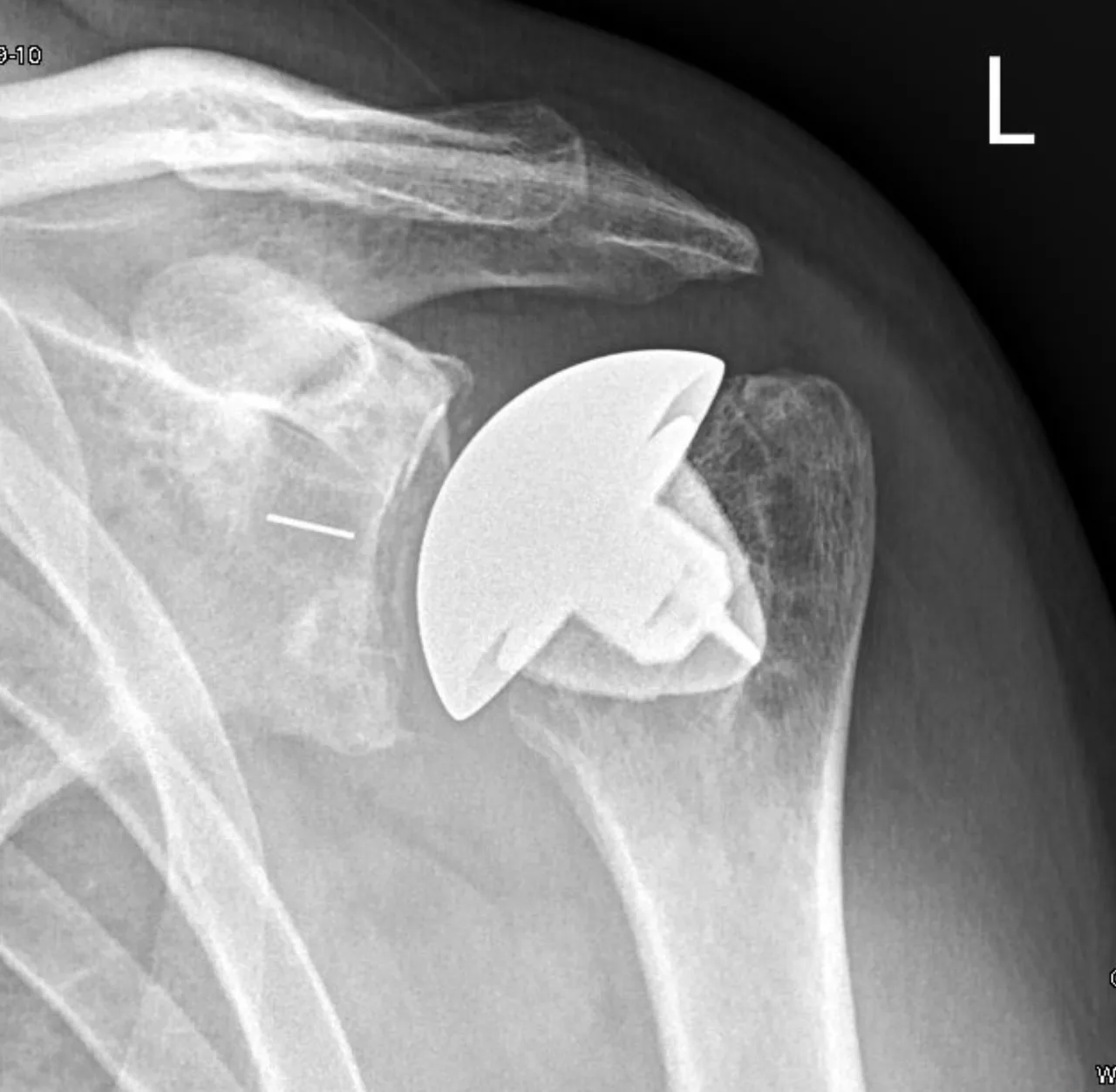
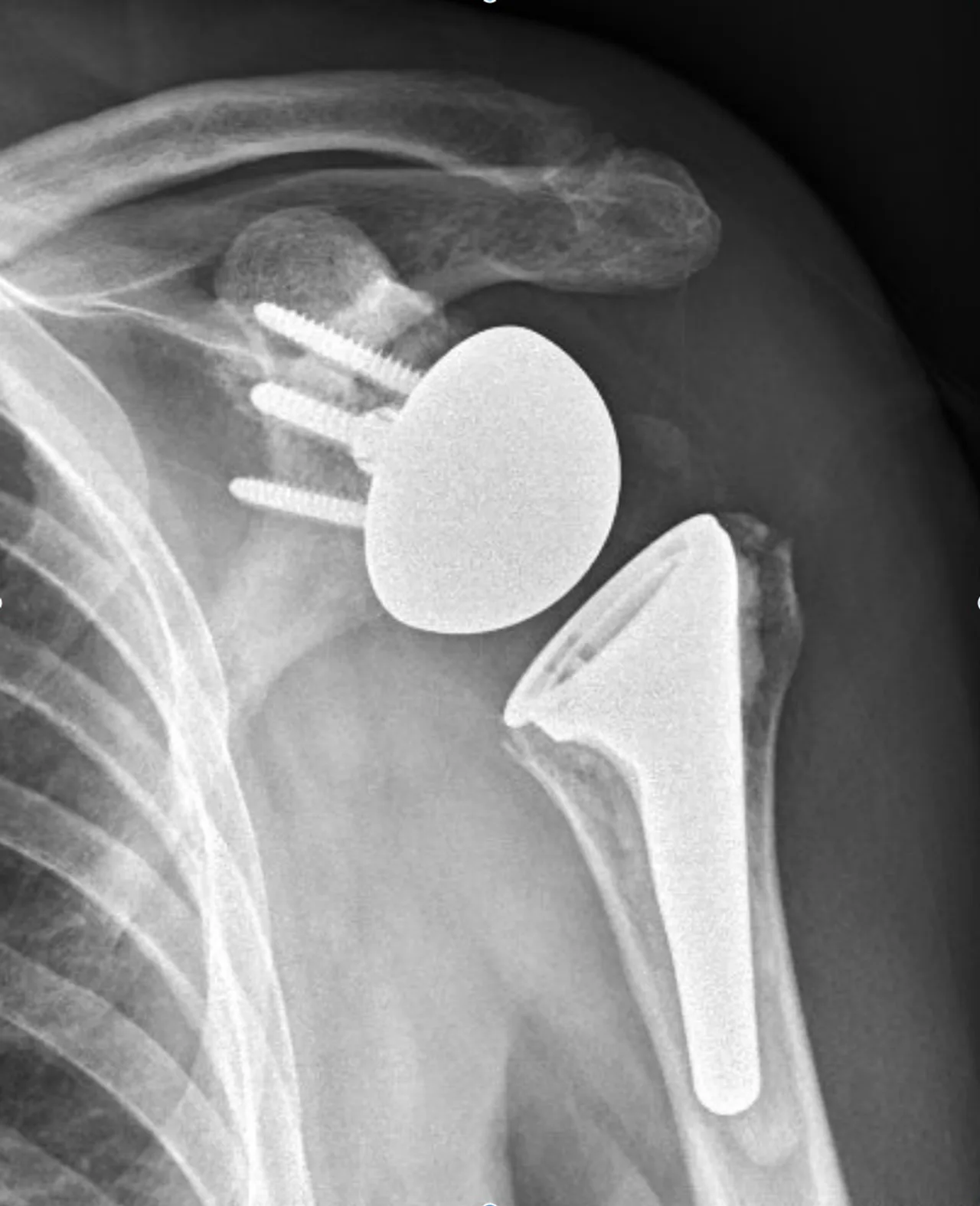
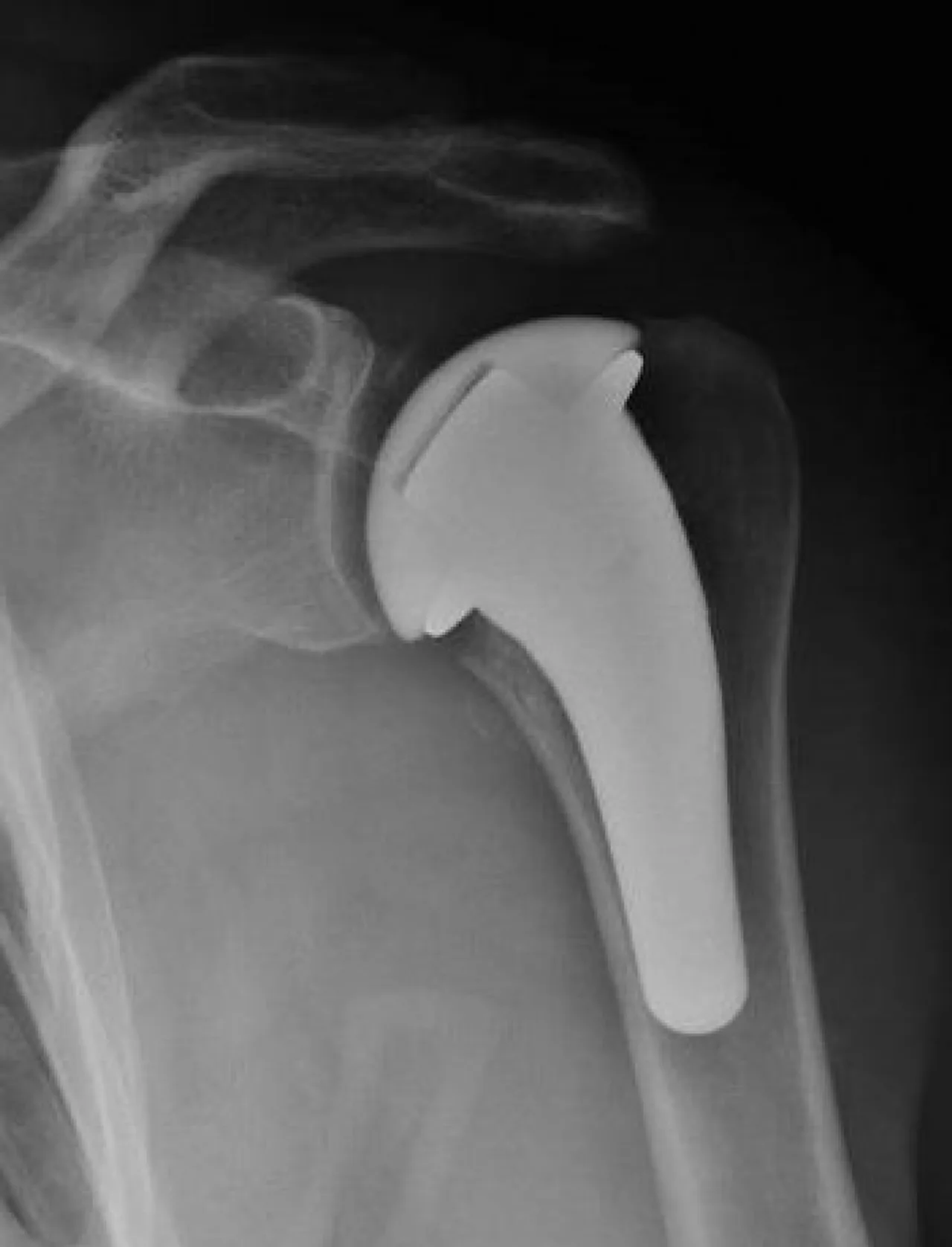
Anatomic total shoulder replacement when the rotator cuff is intact, and reverse total shoulder replacement when the cuff is torn or deficient. The reverse design allows the replacement to function well without a normal rotator cuff. In select cases, such as a younger patient whose socket is still healthy or certain fractures, a hemiarthroplasty replaces only the ball and leaves the socket intact. Before surgery, Dr. Jiang uses a CT scan to build a 3D plan of your shoulder, and custom guides are 3D-printed from that plan to place the implants more accurately during the operation.
- Is my rotator cuff intact — and does that change which replacement I'd need?
- How much longer can injections and therapy hold this?
- What will I realistically be able to do afterward?
These pages describe how these injuries are generally evaluated and treated. They are not a diagnosis and not medical advice. Two people with the same MRI finding can need completely different plans — that is what the visit is for.