Understand your injury.
Choose a condition to read what is damaged, how it is diagnosed, what to try before surgery, and how long recovery takes. These are the conditions we see most often, not a complete list of everything we treat. If yours is not here, call the office.
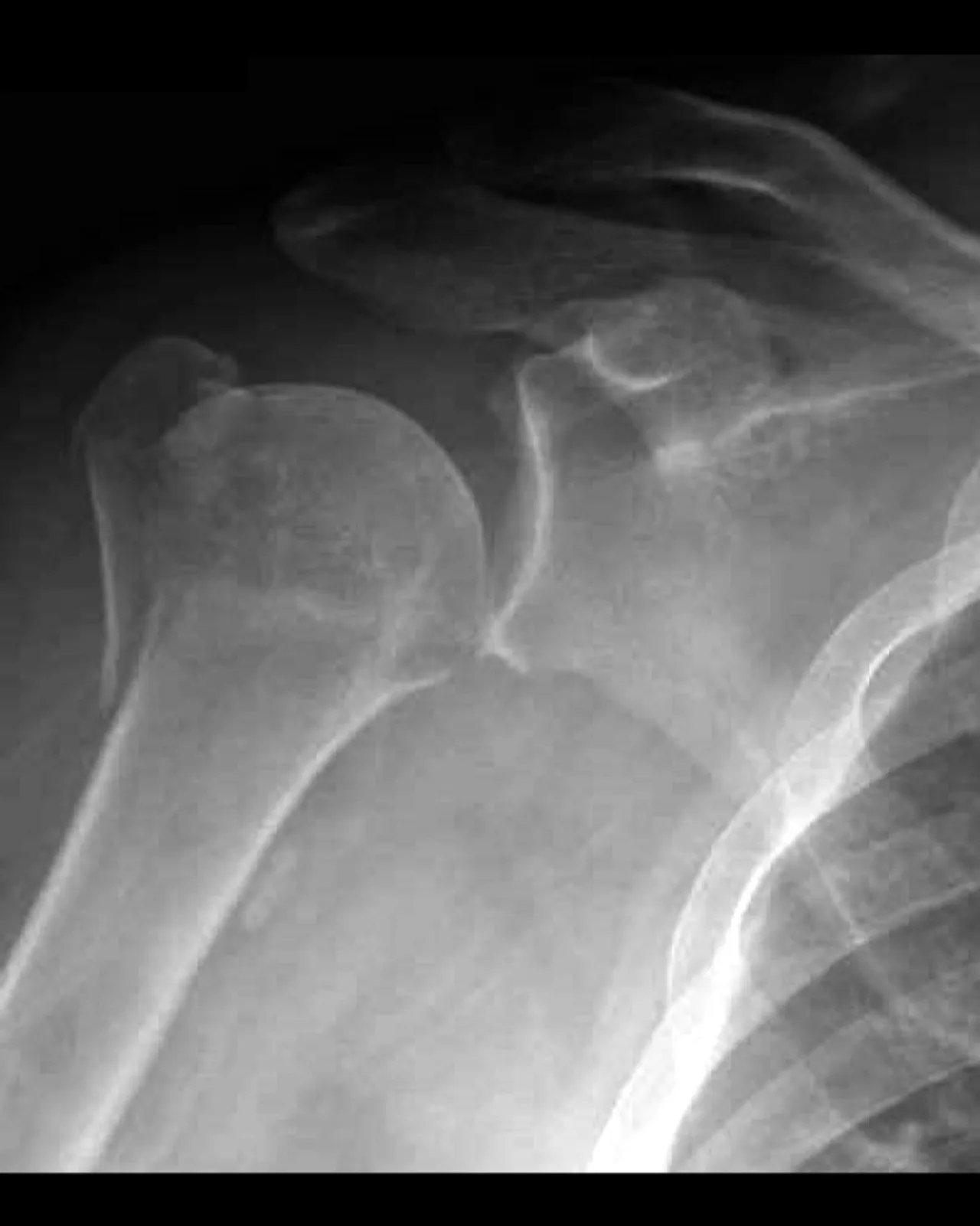
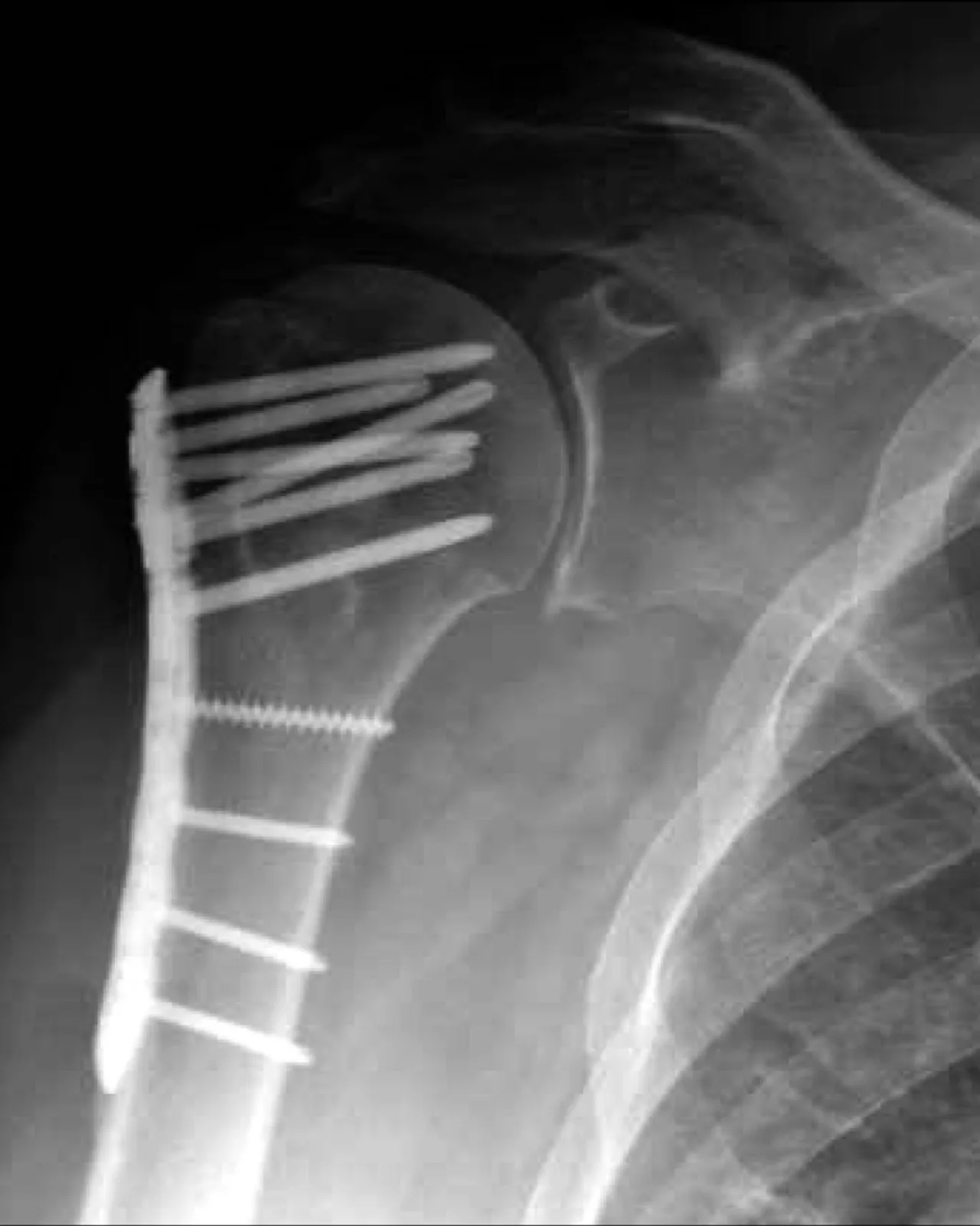
Proximal humerus fracture
A fall onto the shoulder or outstretched arm, with deep pain and extensive bruising down the arm.
This is a break at the top of the upper arm bone, just below the ball of the shoulder — one of the most common fractures in adults over sixty-five and usually the result of a fall from standing height. In younger patients it takes a much higher-energy injury. Bruising that spreads down the arm and into the chest wall over the first few days is expected and alarming to see, but normal. The critical questions are how many fragments there are, how displaced they are, and whether the blood supply to the head of the humerus is intact.
X-rays are taken in several views, and CT is frequently used to count the fragments and measure displacement and angulation accurately. The nerve and blood supply to the arm are checked carefully — the axillary nerve runs right past this fracture. Bone quality matters, and osteoporosis assessment is often part of the plan.
Most of these — around eighty percent — are minimally displaced and heal well in a sling with early, guided motion. Starting pendulum exercises within the first week or two is what prevents the stiffness that otherwise becomes the real long-term problem. Interval X-rays confirm the fracture holds its position.
Considered for significantly displaced or angulated fractures, fracture-dislocations, split fractures of the head, and when the fragments are unlikely to heal in a position that allows useful function.
Plate-and-screw fixation restores the anatomy in most cases. When the head of the humerus is badly fragmented or its blood supply is lost — more common in older patients — reverse total shoulder replacement is the more reliable answer and allows earlier, more predictable function than a repair that may fail.
- How many fragments, and how displaced are they?
- Is the blood supply to the ball of my shoulder intact?
- Should I be evaluated for osteoporosis?
These pages describe how these injuries are generally evaluated and treated. They are not a diagnosis and not medical advice. Two people with the same MRI finding can need completely different plans — that is what the visit is for.