Conditions we treat

Understand your injury.

Choose a condition to read what is damaged, how it is diagnosed, what to try before surgery, and how long recovery takes. These are the conditions we see most often, not a complete list of everything we treat. If yours is not here, call the office.

Shoulder

AC joint separation

A fall directly onto the point of the shoulder, pain on top of the shoulder, and sometimes a visible bump.

What it is

The acromioclavicular (AC) joint is where the collarbone meets the top of the shoulder blade. It is held together by the AC ligaments and, just below them, the stronger coracoclavicular (CC) ligaments. A fall onto the point of the shoulder — common in football, hockey, rugby, cycling, and skiing — pushes the shoulder down and away from the collarbone. Separations are graded from Type I (a sprain) to Type VI; the higher the grade, the more ligaments are torn and the more the end of the collarbone sticks up.

How it's diagnosed

Tenderness right over the AC joint, often with a step-off or bump you can see. X-rays of both shoulders, sometimes with a special angled view, measure how far the collarbone has displaced and determine the grade. MRI is rarely needed.

Non-surgical options first

Most Type I and II injuries, and many Type III injuries, do very well without surgery. Treatment is a sling for comfort for one to three weeks, ice, and anti-inflammatories, followed by physical therapy to restore motion and strengthen the shoulder. A bump may remain, but it usually does not affect function.

When surgery is the right call

Types IV, V, and VI — where the collarbone is severely displaced — are generally treated with surgery. Surgery is also considered for Type III injuries in overhead athletes, heavy laborers, or when pain and weakness persist after a full course of therapy.

Dr. Jiang's approach

Reconstruction of the coracoclavicular ligaments to hold the collarbone back in position, often using a tendon graft and a suture-button device, performed through a small incision with or without arthroscopic assistance. For long-standing arthritis of the AC joint, the end of the collarbone can be trimmed arthroscopically (distal clavicle excision).
Before and after reconstruction
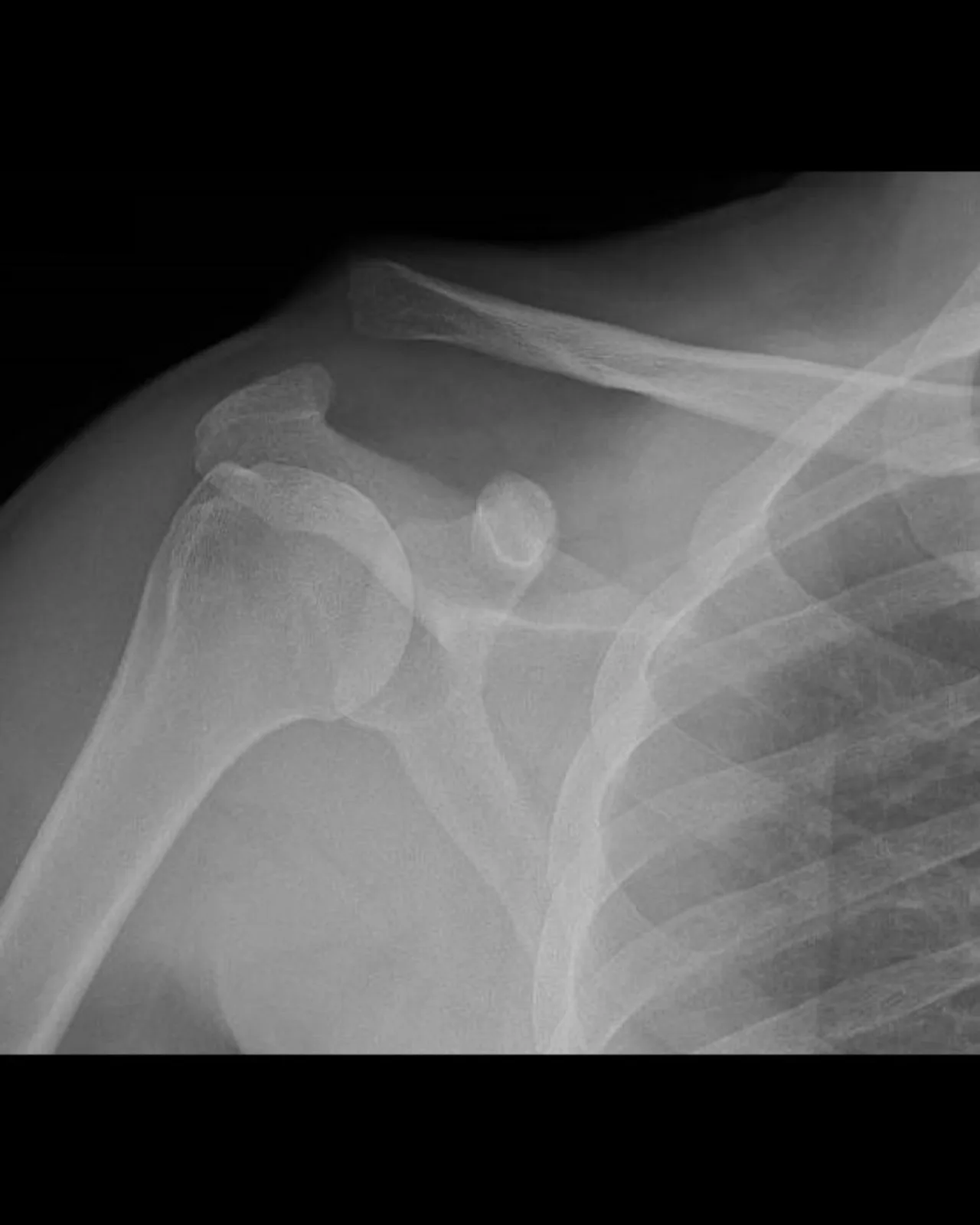
X-ray before surgery
X-ray before surgery The end of the collarbone has lifted well above the top of the shoulder blade because the ligaments holding it down are torn.
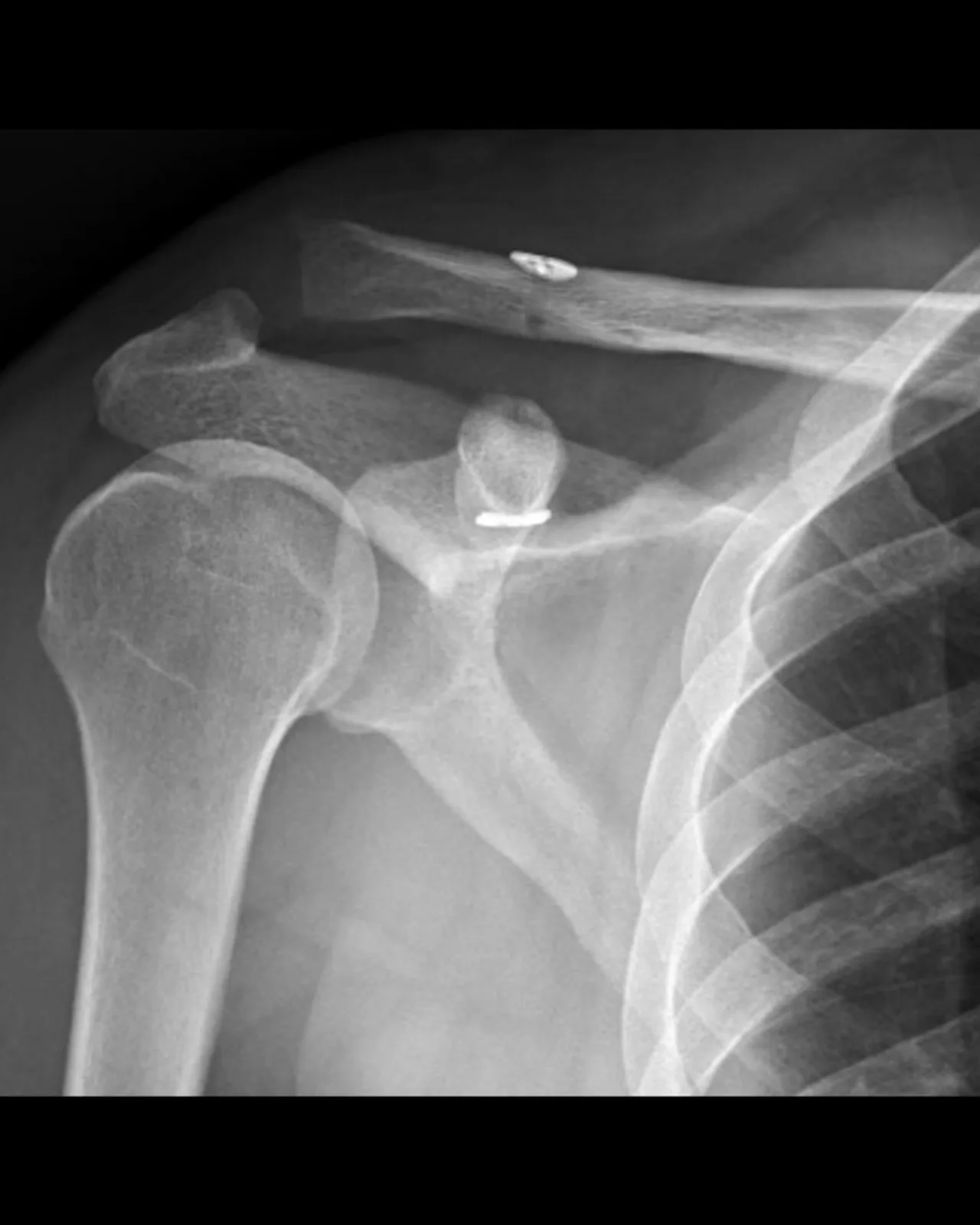
X-ray after surgery
X-ray after surgery The collarbone is back in line with the shoulder, held by buttons in the collarbone and the coracoid while the graft heals.
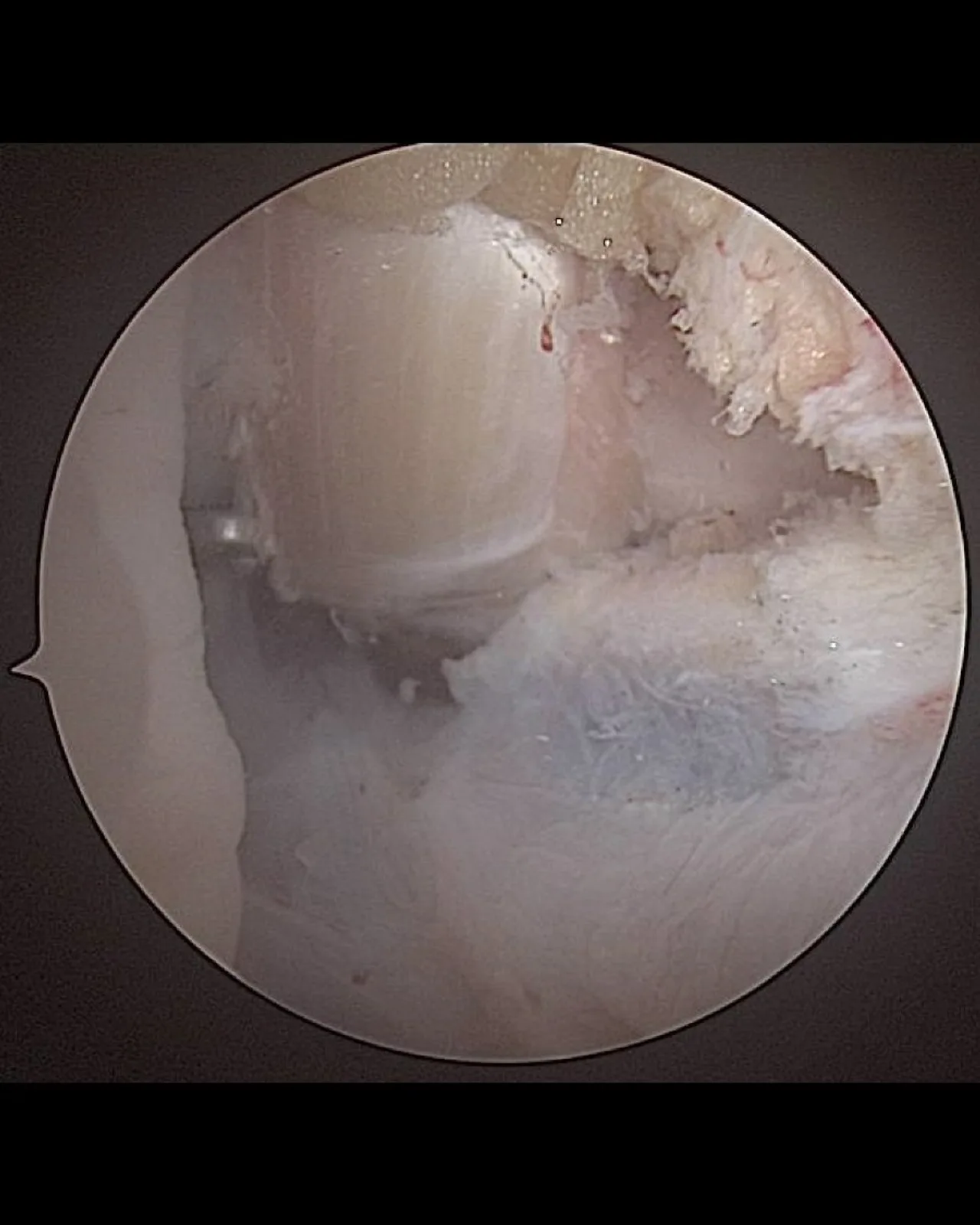
Arthroscopy: graft placement
Arthroscopy: graft placement The tendon graft is passed beneath the coracoid, the bony hook of the shoulder blade that the collarbone is anchored to.
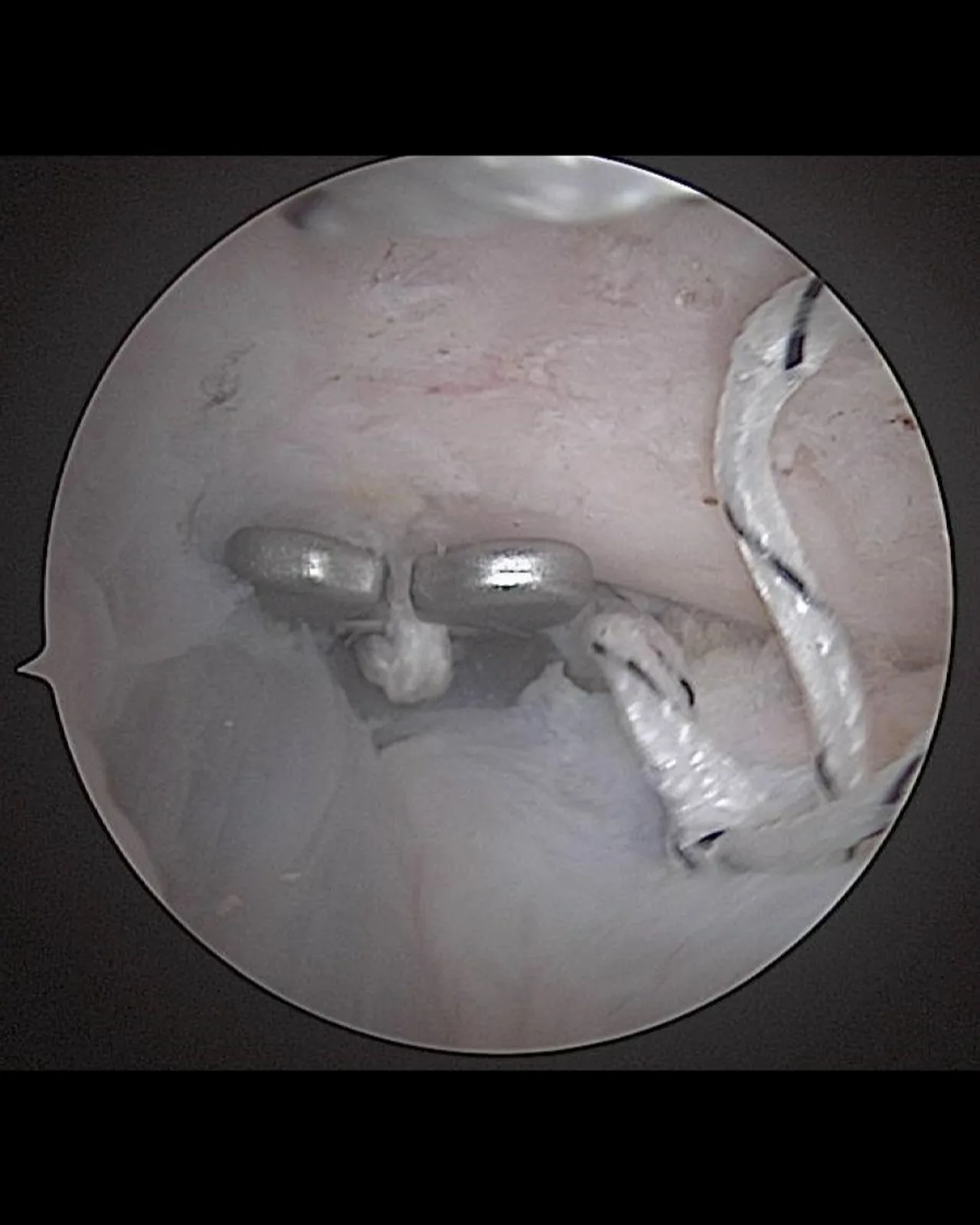
Arthroscopy: suture button
Arthroscopy: suture button A small metal button sits under the coracoid, anchoring the strong suture and graft that hold the collarbone down.
If surgery is needed — recovery timeline
Weeks 0–6
Sling full-time, passive motion only, no lifting — the reconstruction is healing.
Weeks 6–12
Sling weaned, active motion restored, light strengthening.
Months 3–4
Progressive strengthening; return to non-contact activity.
Months 4–6
Return to contact sport and heavy lifting once strength is restored.
Typical ranges. Your timeline depends on the injury, the repair, and how rehab goes.
Questions to ask at your visit
  • What grade is my separation?
  • Will the bump go away, and does it matter if it doesn't?
  • Is there a reason in my sport or job to consider surgery?
Evidence review
Type III AC separation: surgery or rehab? →
What randomized trials show for type III injuries, and who benefits from surgery, with references.
Evidence review
Acute repair for type III AC separation →
What early repair involves, who it suits, and the results, with references.
Read more from the AAOS
Shoulder Separation →
A note on what you read here

These pages describe how these injuries are generally evaluated and treated. They are not a diagnosis and not medical advice. Two people with the same MRI finding can need completely different plans — that is what the visit is for.

Not sure which of these you have? That's the normal reason to come in.

Request an Appointment
Kevin Jiang, MD
Orthopaedic Surgery · Sports Medicine
English · Mandarin · Spanish
Accepting new patients
Locations
72-06 Northern Blvd, 2nd Fl
Jackson Heights, NY 11372

2825 Jackson Ave
Long Island City, NY 11101

(866) 670-6824
Fax: (718) 533-1770
Where surgery happens
NewYork-Presbyterian Queens
56-45 Main Street, 4th Fl South
Flushing, NY 11355
(718) 670-2558
Hospital affiliations: NewYork-Presbyterian Queens; NewYork-Presbyterian / Columbia University Irving Medical Center; Hospital for Special Surgery (Affiliate Medical Staff). Institutional names denote affiliation, not endorsement.
This site is for informational purposes only and does not constitute medical advice. Use of this site does not create a doctor-patient relationship. For emergencies call 911.
© 2026 Kevin Jiang, MD