Understand your injury.
Choose a condition to read what is damaged, how it is diagnosed, what to try before surgery, and how long recovery takes. These are the conditions we see most often, not a complete list of everything we treat. If yours is not here, call the office.
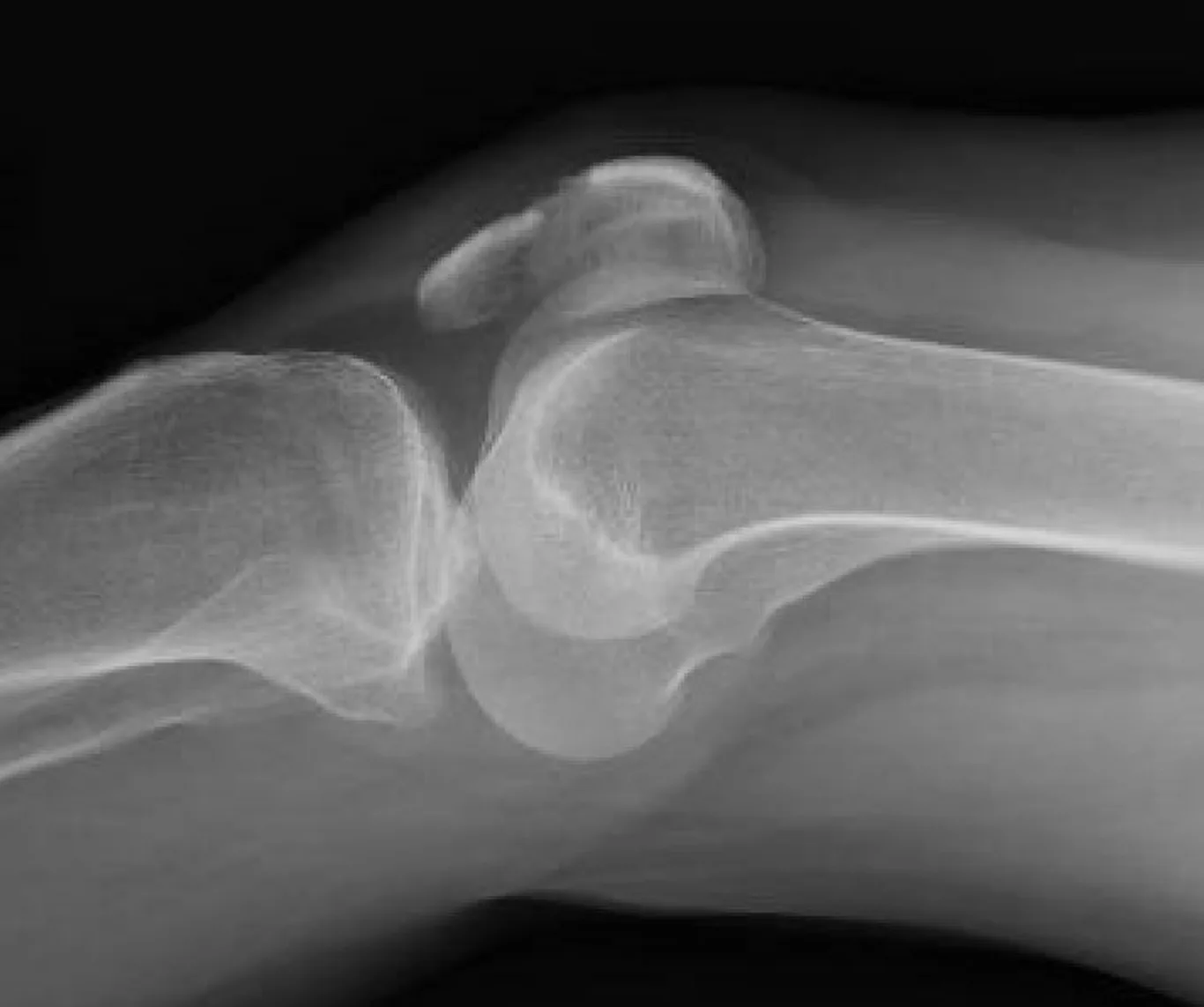
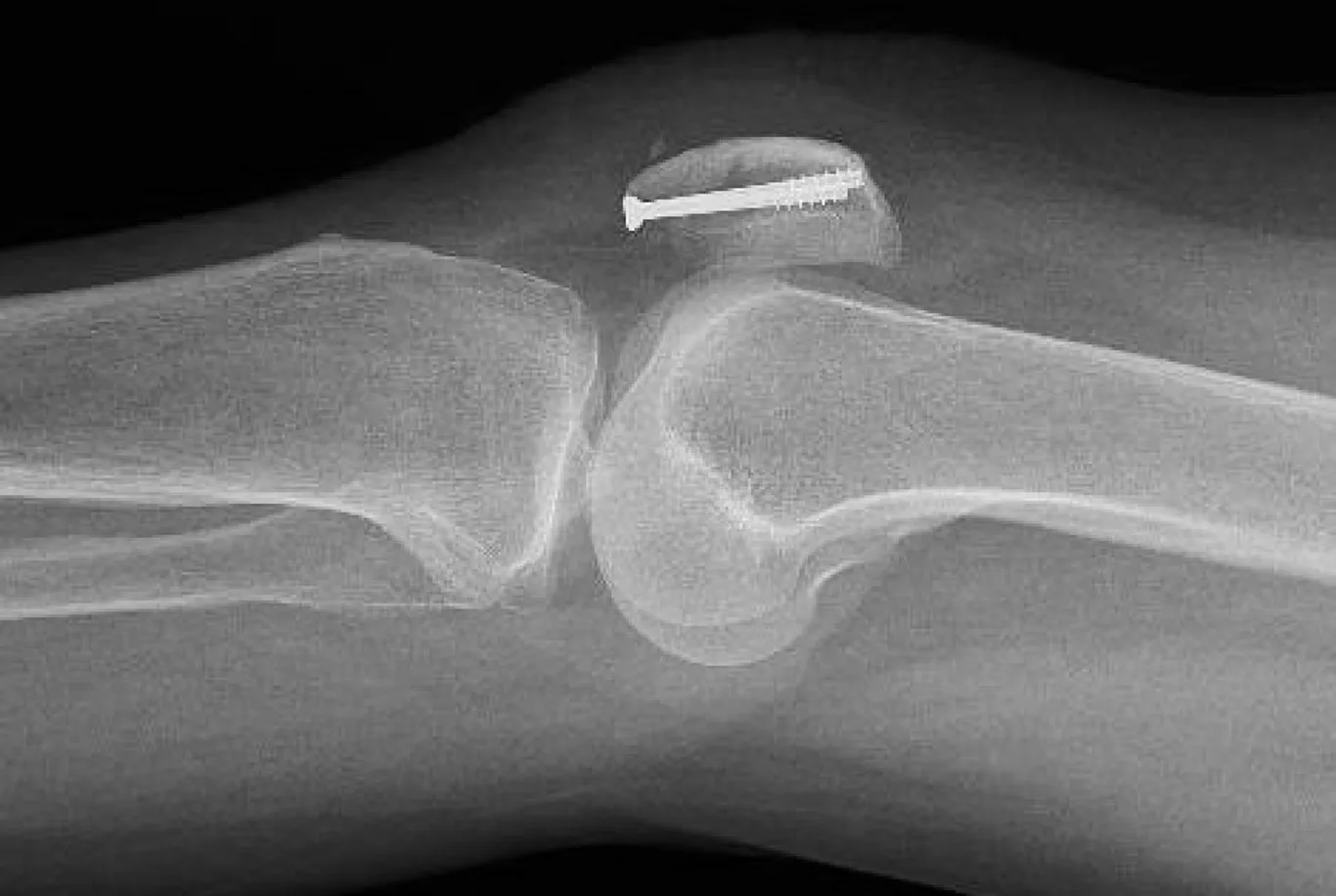
Patellar fracture
A direct blow to the kneecap, and an inability to straighten the leg.
The kneecap is a sesamoid bone within the quadriceps mechanism. A fracture that separates the fragments breaks the extensor mechanism, and the defining question at the first visit is simple: can you actively straighten your knee against gravity?
X-rays are taken, including a sunrise view. The active straight-leg-raise test determines whether the extensor mechanism is intact and drives the treatment decision.
Non-displaced fractures with an intact extensor mechanism are treated in a brace locked in extension with weight-bearing as tolerated and progressive motion.
Displaced fractures, and any fracture where the extensor mechanism is disrupted, need fixation — an unfixed extensor mechanism will not recover on its own.
Fixation with screws, a tension band of wire or strong suture, or a plate, to restore the joint surface and the pull of the quadriceps, with early protected motion to prevent stiffness.
- Can I still straighten my leg — what does that mean for me?
- Is the joint surface stepped off?
- Will the hardware need to come out later?
These pages describe how these injuries are generally evaluated and treated. They are not a diagnosis and not medical advice. Two people with the same MRI finding can need completely different plans — that is what the visit is for.