Conditions we treat

Understand your injury.

Choose a condition to read what is damaged, how it is diagnosed, what to try before surgery, and how long recovery takes. These are the conditions we see most often, not a complete list of everything we treat. If yours is not here, call the office.

Knee

Meniscus tear

Pain along the joint line, catching or locking, and swelling that comes and goes.

What it is

The menisci are two C-shaped cartilage cushions that spread load across the knee. Younger patients tear them in a twisting injury; over forty, they often fray from ordinary wear and tear and can become symptomatic after something as small as standing up from a squat. Typical symptoms are pain on one side of the joint, swelling, and a catching or locking sensation.

How it's diagnosed

Joint-line tenderness and a positive McMurray test on exam, with MRI to confirm the tear pattern and location. Location matters enormously: the outer third has a blood supply and can heal if repaired, the inner two-thirds generally cannot.

Non-surgical options first

Degenerative tears frequently settle with physical therapy, activity modification, and sometimes a corticosteroid injection. The evidence here is strong — for many older patients with a degenerative tear, structured therapy performs as well as surgery.

When surgery is the right call

Surgery is indicated for a true mechanical block (a knee that locks and will not fully straighten), for displaced bucket-handle tears, and for symptomatic tears in younger and athletic patients that have not responded to therapy.

Dr. Jiang's approach

Arthroscopic repair whenever the tear pattern and blood supply allow it — preserving meniscus protects the knee from arthritis decades later. When the tissue cannot heal, a partial meniscectomy removes only the unstable fragment and nothing more.
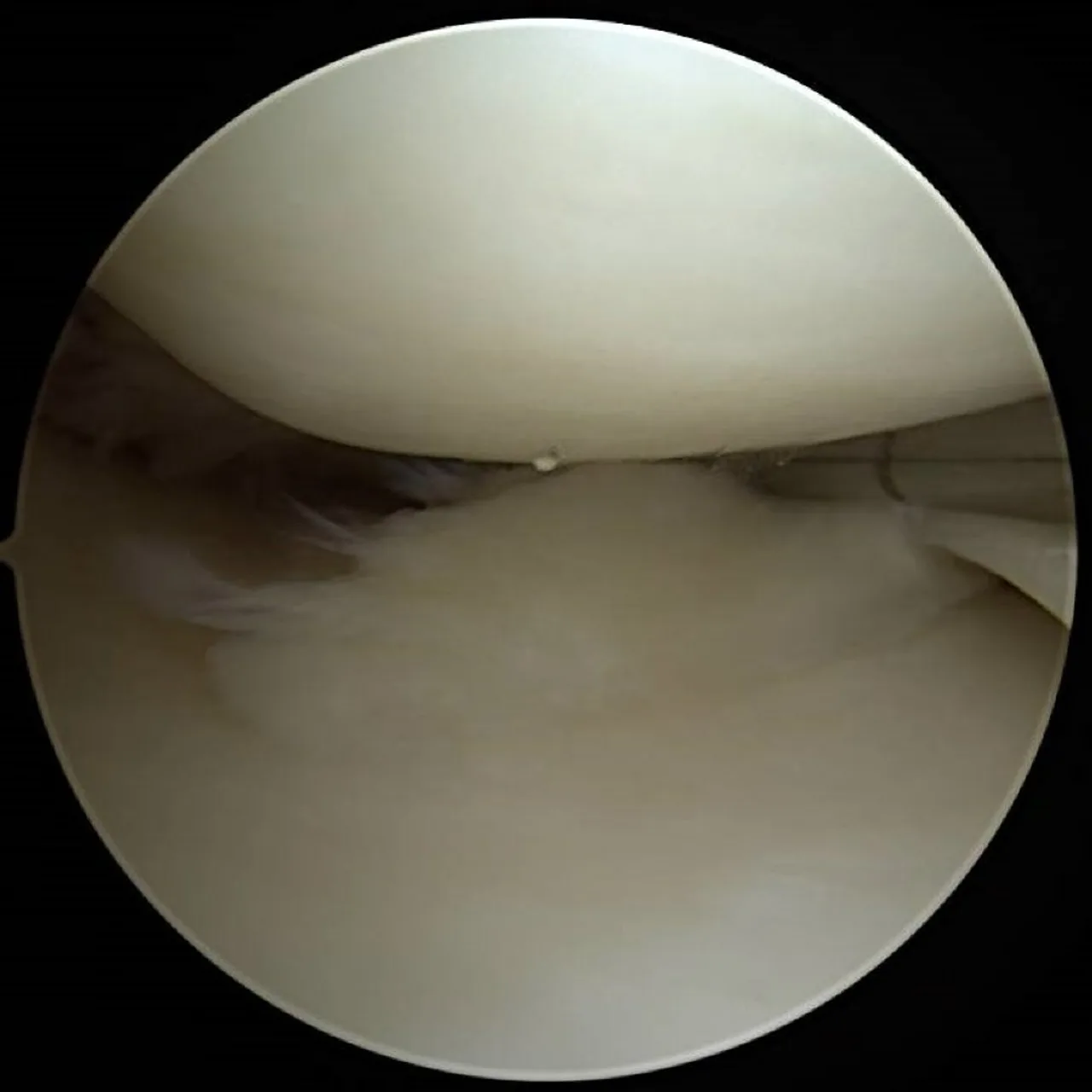
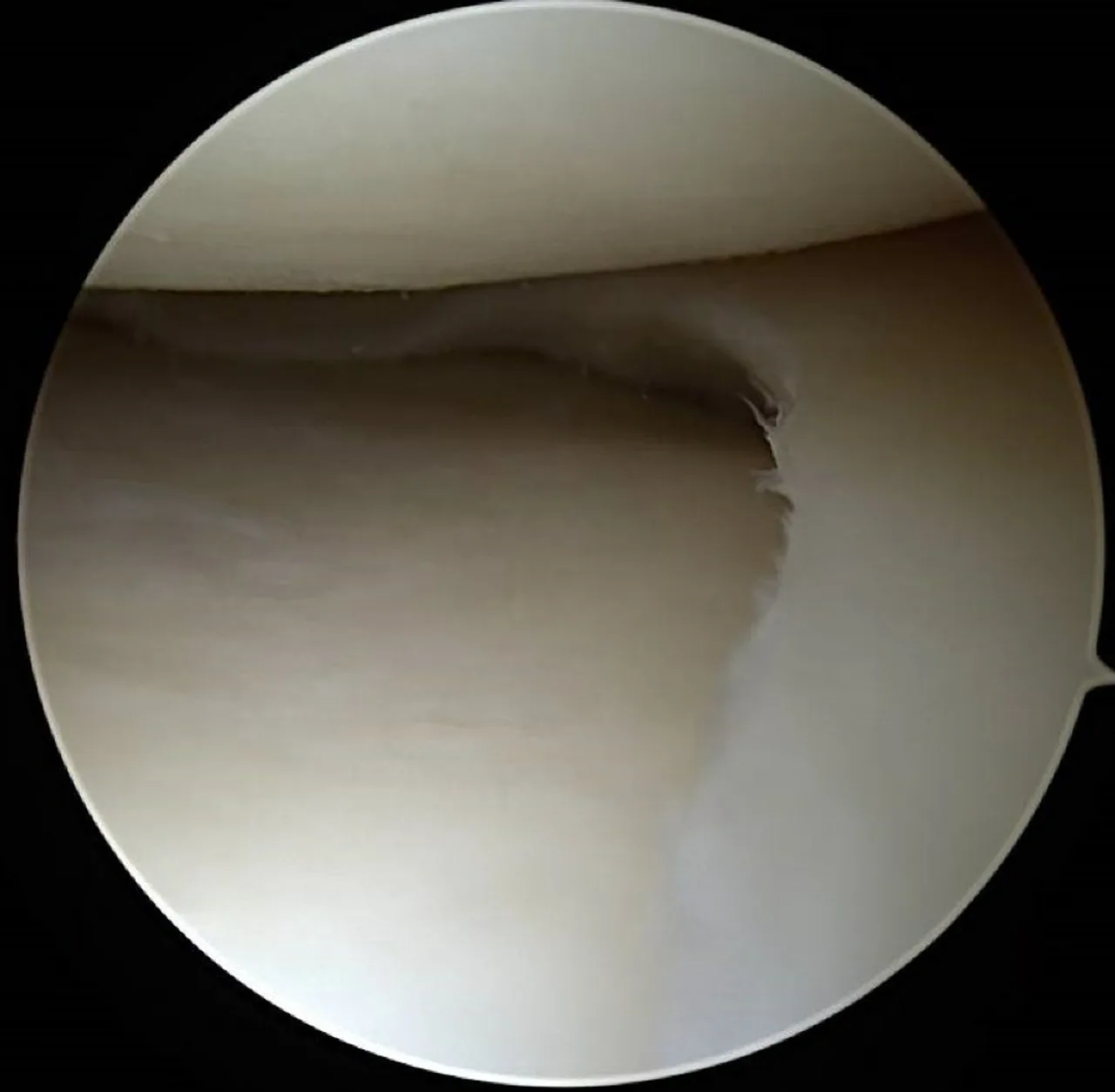
Through the arthroscope
Before: flap tear
Before: flap tear The view through the arthroscope. A large torn fragment of the meniscus, the cushion between the thigh and shin bones, can flip forward into the joint, causing catching and pain.
After: partial meniscectomy
After: partial meniscectomy The loose fragment has been trimmed away, leaving a smooth, stable meniscus to cushion the joint.
If surgery is needed — recovery timeline
Repair, weeks 0–6
Weight-bearing as tolerated right away, with a brace and limited bending of the knee to let the repair heal.
Repair, months 2–4
Progressive strengthening; return to sport typically 4–6 months.
Meniscectomy, week 1
Weight-bearing as tolerated, often off crutches within days.
Meniscectomy, weeks 3–6
Return to most activity, including sport for many patients.
Typical ranges. Your timeline depends on the injury, the repair, and how rehab goes.
Questions to ask at your visit
  • Is my tear repairable, or will part of it need to be removed?
  • How much meniscus will be left?
  • Would therapy alone be reasonable to try first?
Evidence review
Meniscus tears in a knee with arthritis →
What the trials show, and why arthroscopy is the last option in this setting.
Read more from the AAOS
Meniscus Tears →
A note on what you read here

These pages describe how these injuries are generally evaluated and treated. They are not a diagnosis and not medical advice. Two people with the same MRI finding can need completely different plans — that is what the visit is for.

Not sure which of these you have? That's the normal reason to come in.

Request an Appointment
Kevin Jiang, MD
Orthopaedic Surgery · Sports Medicine
English · Mandarin · Spanish
Accepting new patients
Locations
72-06 Northern Blvd, 2nd Fl
Jackson Heights, NY 11372

2825 Jackson Ave
Long Island City, NY 11101

(866) 670-6824
Fax: (718) 533-1770
Where surgery happens
NewYork-Presbyterian Queens
56-45 Main Street, 4th Fl South
Flushing, NY 11355
(718) 670-2558
Hospital affiliations: NewYork-Presbyterian Queens; NewYork-Presbyterian / Columbia University Irving Medical Center; Hospital for Special Surgery (Affiliate Medical Staff). Institutional names denote affiliation, not endorsement.
This site is for informational purposes only and does not constitute medical advice. Use of this site does not create a doctor-patient relationship. For emergencies call 911.
© 2026 Kevin Jiang, MD