Understand your injury.
Choose a condition to read what is damaged, how it is diagnosed, what to try before surgery, and how long recovery takes. These are the conditions we see most often, not a complete list of everything we treat. If yours is not here, call the office.
Clavicle fracture
A fall onto the shoulder with a visible bump and pain moving the arm.
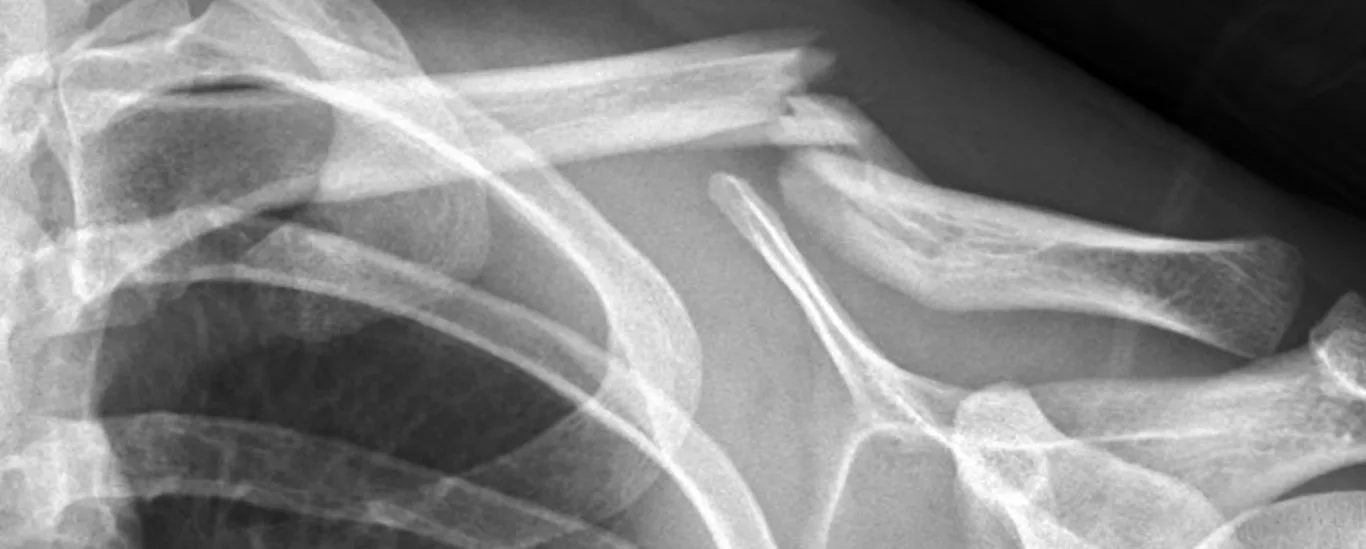
The collarbone is the most commonly fractured bone in cycling, contact sport, and falls onto the shoulder. Most break in the middle third. Many heal well in a sling, but significantly displaced or shortened fractures have higher rates of nonunion and can leave a weaker, more fatigable shoulder.
X-rays confirm the pattern and measure displacement and shortening. The skin overlying the fracture is checked — a fragment tenting the skin is an urgent finding.
A sling for comfort, early elbow and hand motion, and progressive shoulder motion as pain allows, with interval X-rays.
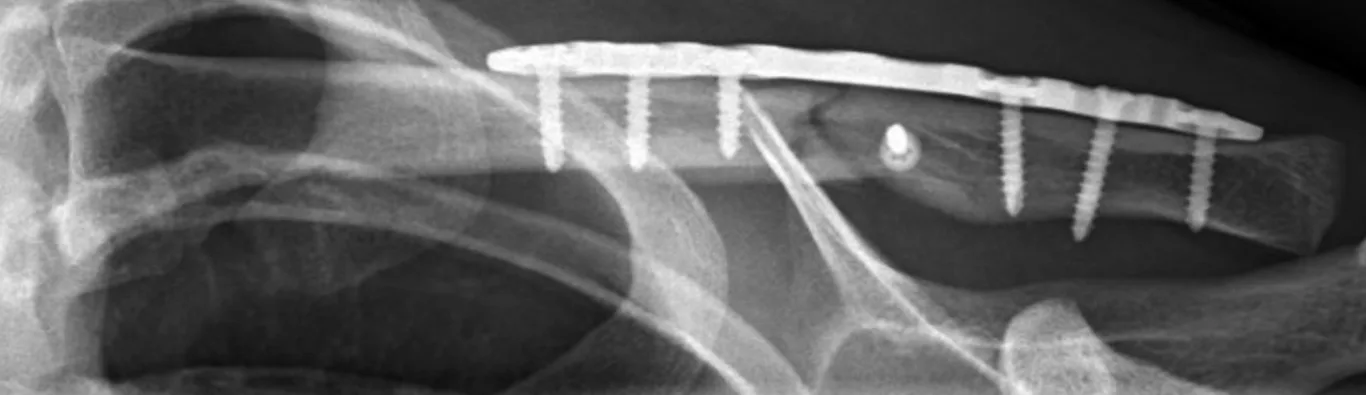
Recommended for significant displacement or shortening, open fractures, skin at risk, or in athletes and manual workers who need reliable and rapid restoration of strength.
Plate fixation restores length and alignment and allows earlier motion and a more predictable return to work and sport.
- How displaced is it, and does that change my outcome?
- What is my nonunion risk without surgery?
- When can I ride or lift again?
These pages describe how these injuries are generally evaluated and treated. They are not a diagnosis and not medical advice. Two people with the same MRI finding can need completely different plans — that is what the visit is for.