Understand your injury.
Choose a condition to read what is damaged, how it is diagnosed, what to try before surgery, and how long recovery takes. These are the conditions we see most often, not a complete list of everything we treat. If yours is not here, call the office.
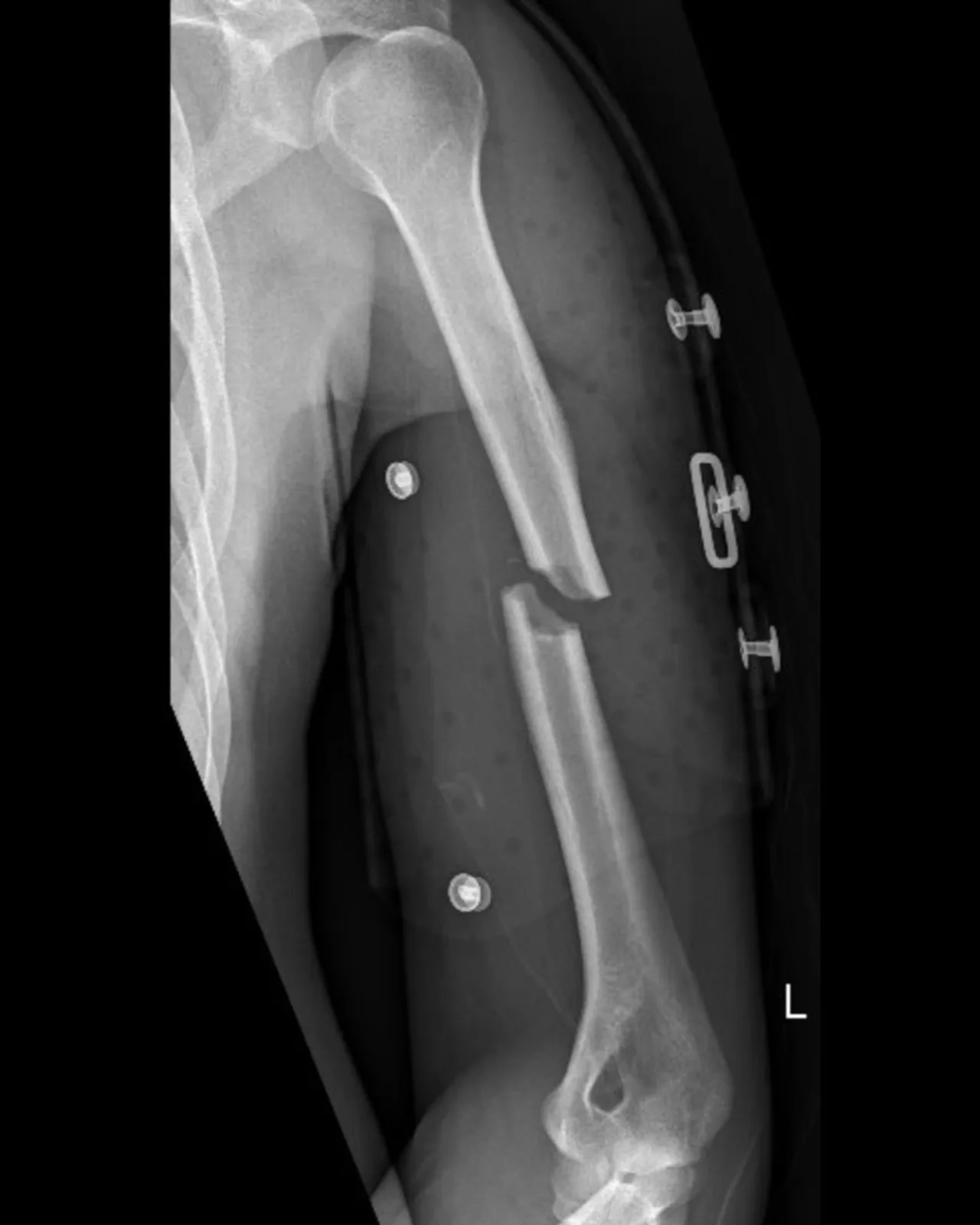
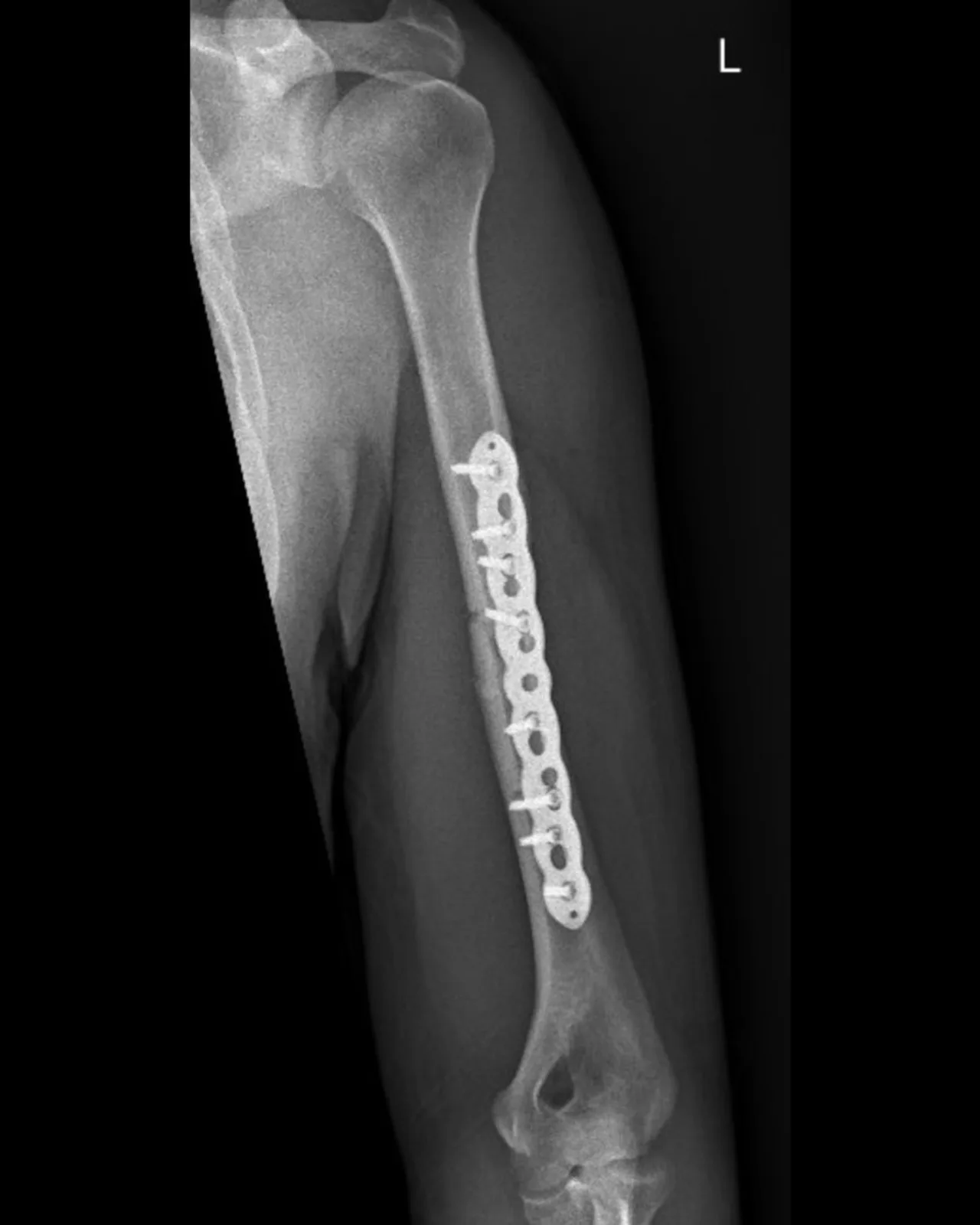
Humerus shaft fracture
A break in the middle of the upper arm — sometimes with a wrist that won't lift.
This is a fracture through the shaft of the upper arm bone, caused by a fall, a direct blow, a twisting injury, or occasionally throwing. The radial nerve winds around the back of the humerus at this level, so roughly one in ten of these injuries comes with a radial nerve palsy — a wrist and fingers that cannot extend. That is frightening but usually temporary: the great majority recover over three to six months as the nerve, which is stretched rather than cut, heals.
X-rays are taken of the full humerus, including the shoulder and elbow. A careful nerve exam is essential and is documented before and after any treatment. CT is rarely needed; nerve conduction studies are used later if function has not returned.
The humerus tolerates imperfect alignment better than almost any other long bone, and a functional brace — a sleeve that uses the soft tissues to hold alignment while gravity does the work — heals the large majority of these. It requires patience and frequent X-rays but avoids surgery entirely. Transverse fractures, where the bone breaks straight across, have a higher risk of not healing in a brace than spiral or oblique fractures, which is factored into the decision.
Indicated for open fractures, fractures that will not hold acceptable alignment in a brace, multiple injuries, an associated vascular injury, and a radial nerve palsy that appears after a manipulation rather than at the time of injury.
Plate fixation or an intramedullary nail, with the radial nerve identified and protected during the approach. Fixation allows earlier use of the arm, which matters most for patients who need the limb to walk with an aid or who have other injuries.
- Can my wrist and fingers lift — and if not, what does that mean?
- Will a brace hold this, or do I need fixation?
- How long before the bone is healed enough to lift?
These pages describe how these injuries are generally evaluated and treated. They are not a diagnosis and not medical advice. Two people with the same MRI finding can need completely different plans — that is what the visit is for.