Understand your injury.
Choose a condition to read what is damaged, how it is diagnosed, what to try before surgery, and how long recovery takes. These are the conditions we see most often, not a complete list of everything we treat. If yours is not here, call the office.
Rotator cuff tear
Pain reaching overhead or behind you, night pain lying on that side, weakness lifting.
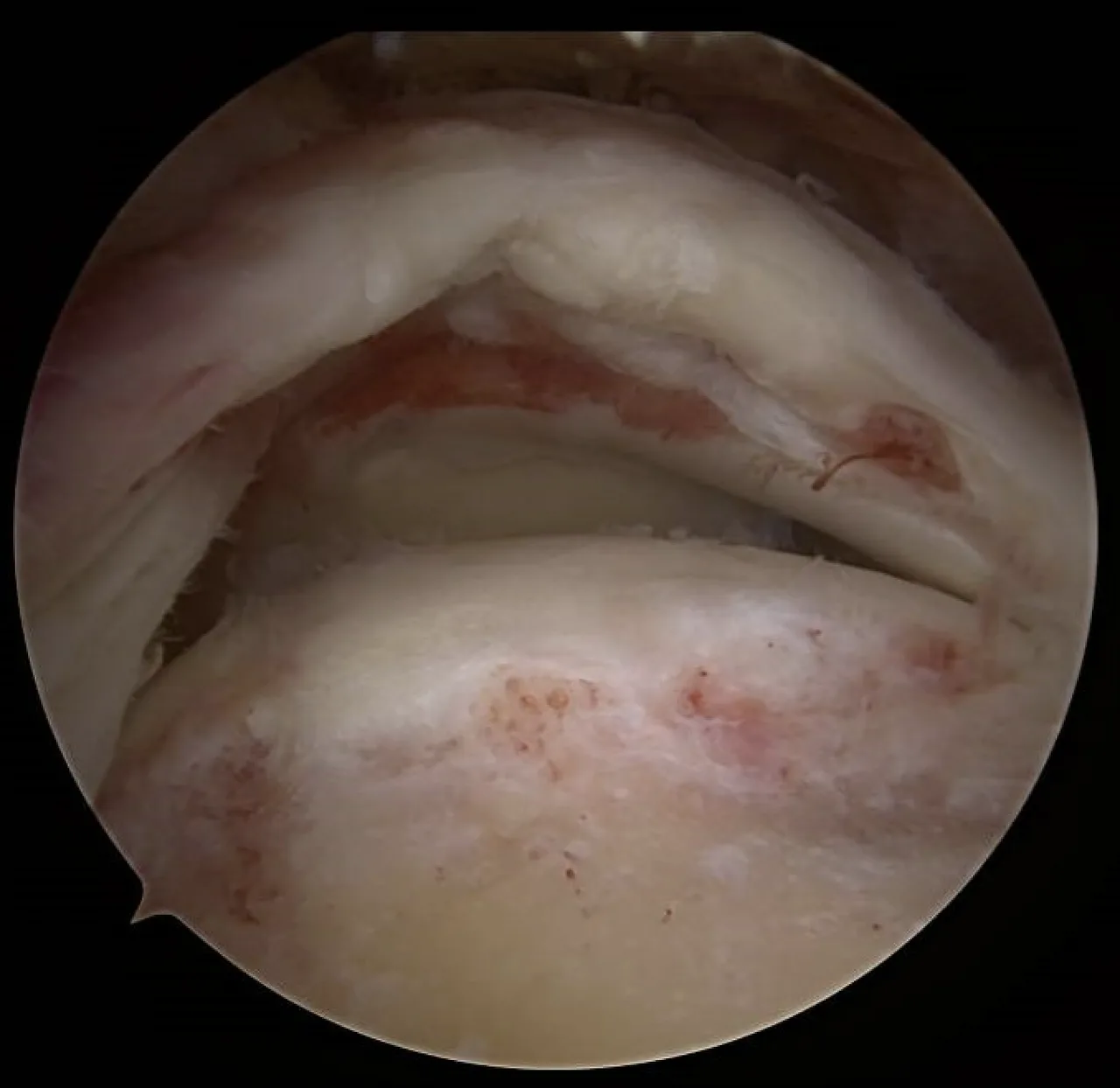
The rotator cuff is four muscles whose tendons wrap the ball of the shoulder and hold it centered while the larger muscles move the arm. Tears happen acutely in a fall or a heavy lift, or gradually as the tendon degenerates with age. The hallmarks are pain reaching overhead, pain at night that wakes you, and weakness that does not improve with rest.
Strength testing of each cuff tendon in the office identifies which is involved. X-rays check for bone spurs and arthritis. MRI shows whether the tear is partial or full thickness, its size, and whether the muscle has atrophied — which affects whether repair will hold.
Partial tears and full-thickness tears that were not caused by an injury (degenerative tears) can often be treated with physical therapy aimed at the scapula and remaining cuff, along with activity modification, anti-inflammatories, and a well-placed corticosteroid injection.
Recommended for acute traumatic tears in active patients, for tears causing functional weakness, and for pain that persists after three to six months of good therapy. Large tears left alone can retract and become irreparable, so timing matters more here than in most conditions.
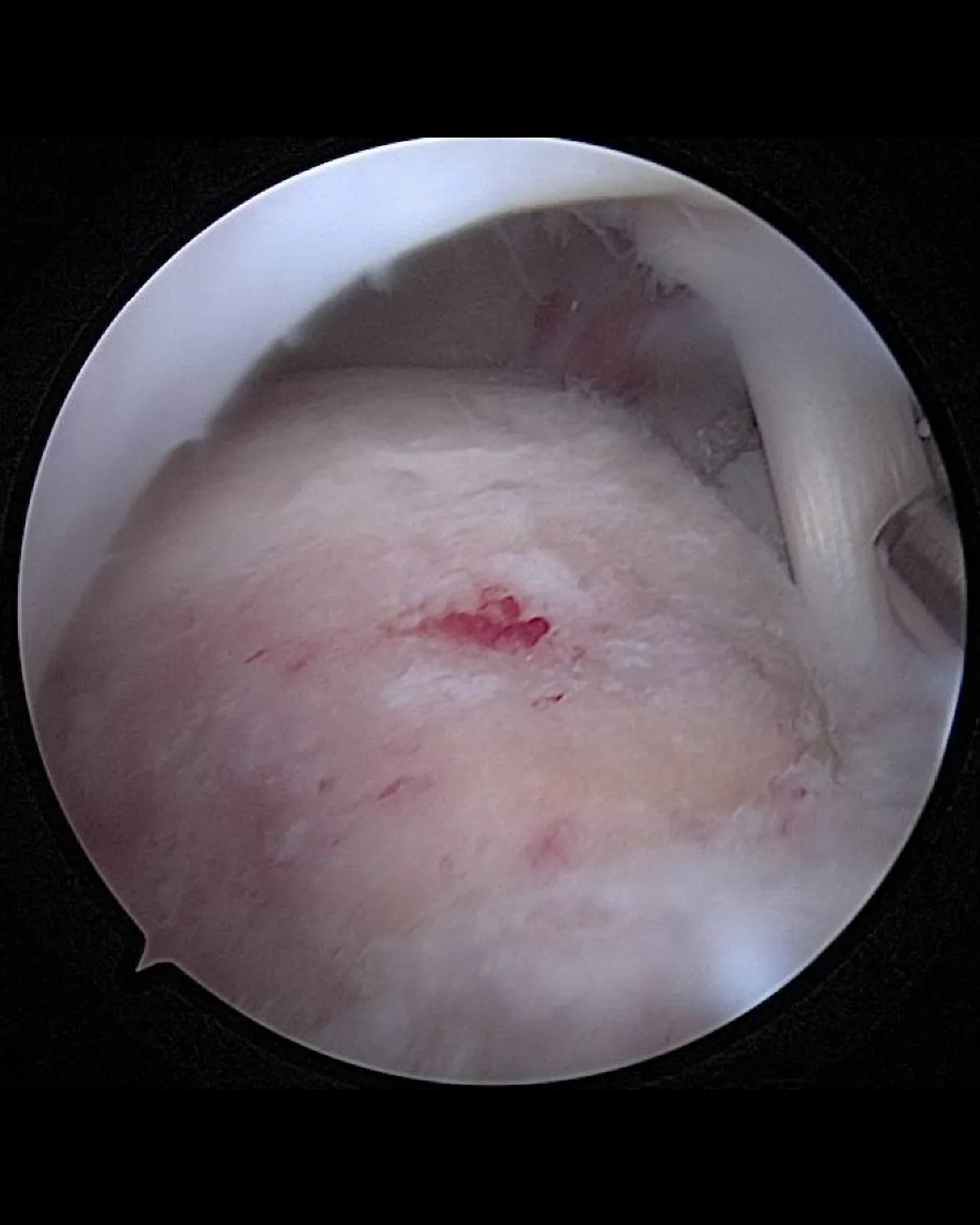
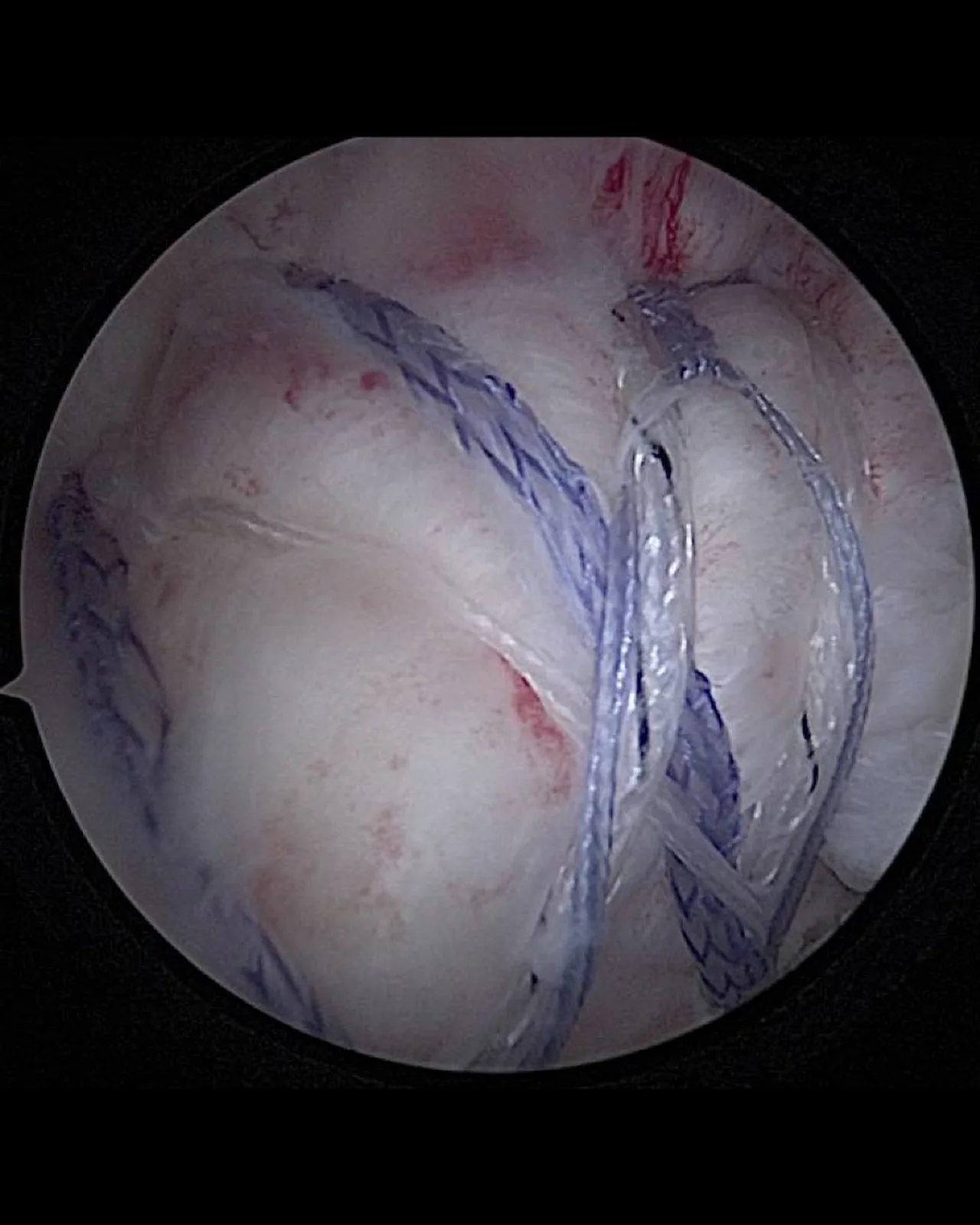
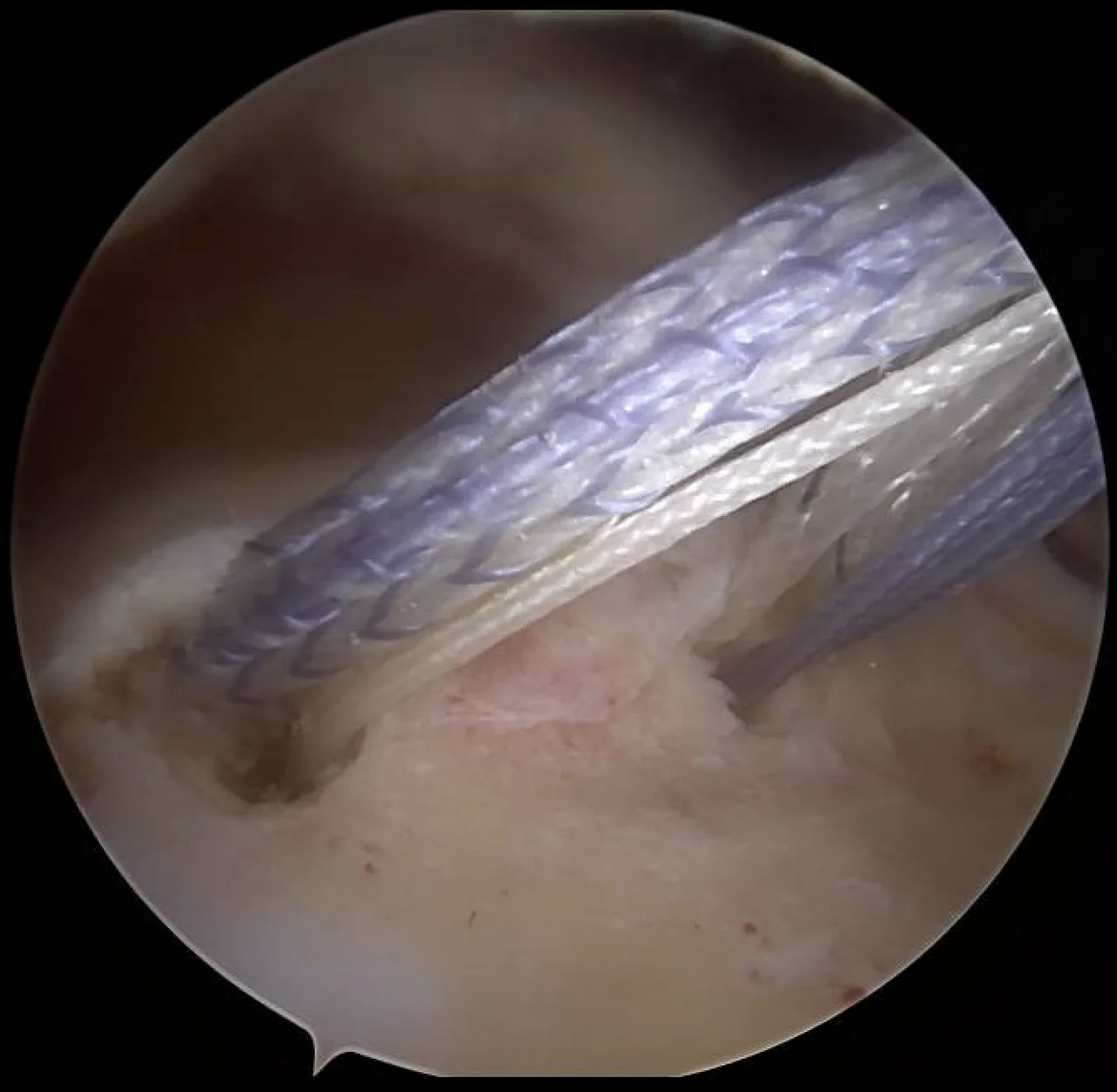
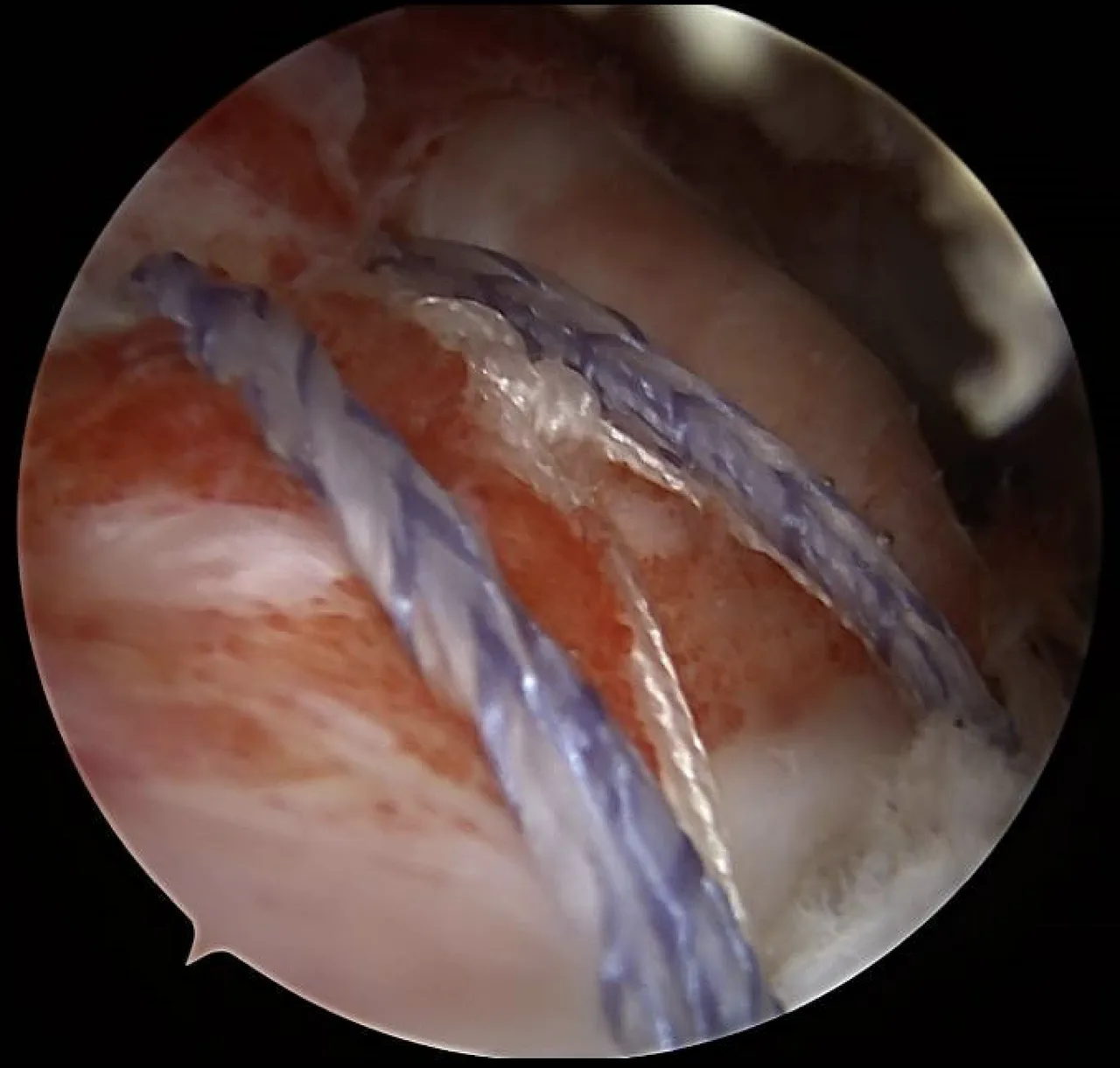
Arthroscopic repair through small portals — the tendon is brought back to its bony footprint and secured with suture anchors. Biceps tendon pathology and spurs are addressed in the same procedure, which is done on an outpatient basis. When a tear is large and cannot be repaired — the tendon has retracted and the muscle has atrophied — there are three good options rather than none. Superior capsular reconstruction places a graft across the top of the joint to stop the ball riding upward, and suits younger patients with preserved cartilage. Tendon transfer borrows a working muscle from elsewhere (lower trapezius or latissimus dorsi) to restore the rotation that has been lost. Reverse total shoulder replacement changes the mechanics of the joint so the deltoid does the cuff's work, and is the most reliable choice for older patients or where arthritis has already set in.
- Is my tear partial or full thickness, and how big?
- Does the muscle still look healthy on MRI?
- If my tear can't be repaired, which option fits me — reconstruction, tendon transfer, or reverse replacement?
These pages describe how these injuries are generally evaluated and treated. They are not a diagnosis and not medical advice. Two people with the same MRI finding can need completely different plans — that is what the visit is for.